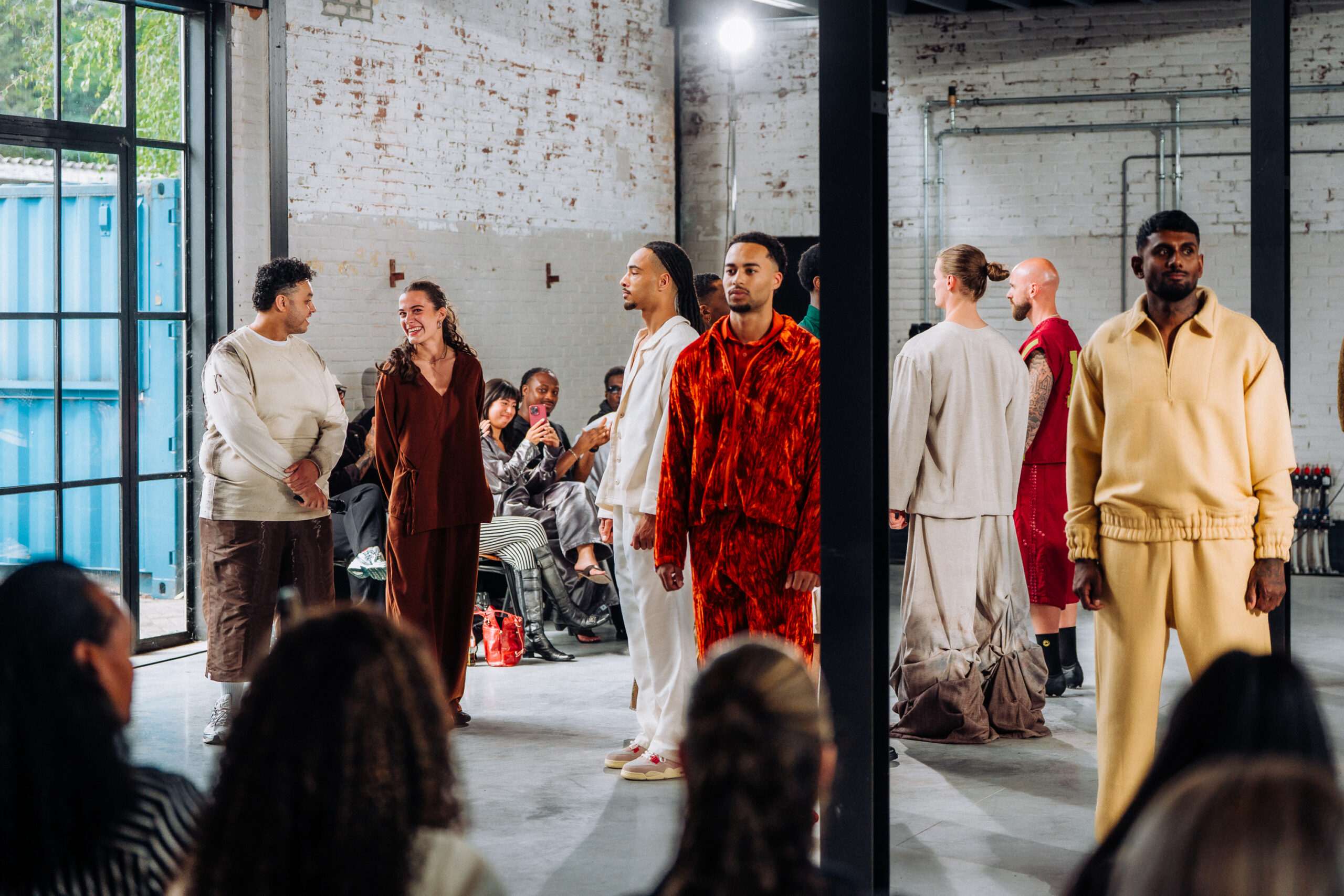
The results of this research make clear that the relationship between clothing and identity is more complex than commonly assumed and that I had, to a certain extent, underestimated this myself. Although clothing can function as a means of exploring identity, it proves unsuitable as an instrument for fully and unambiguously capturing it.
One of the most important limitations lies in the dependence on interpretation. The meaning of a design does not emerge within the design alone but in interaction with the viewer. The designer can only partially steer this interpretation and that partiality is a structural property of the process. Moreover, the developed method proves strongly dependent on context and person. Every translation of identity calls for a specific approach, making the process difficult to standardise or scale.

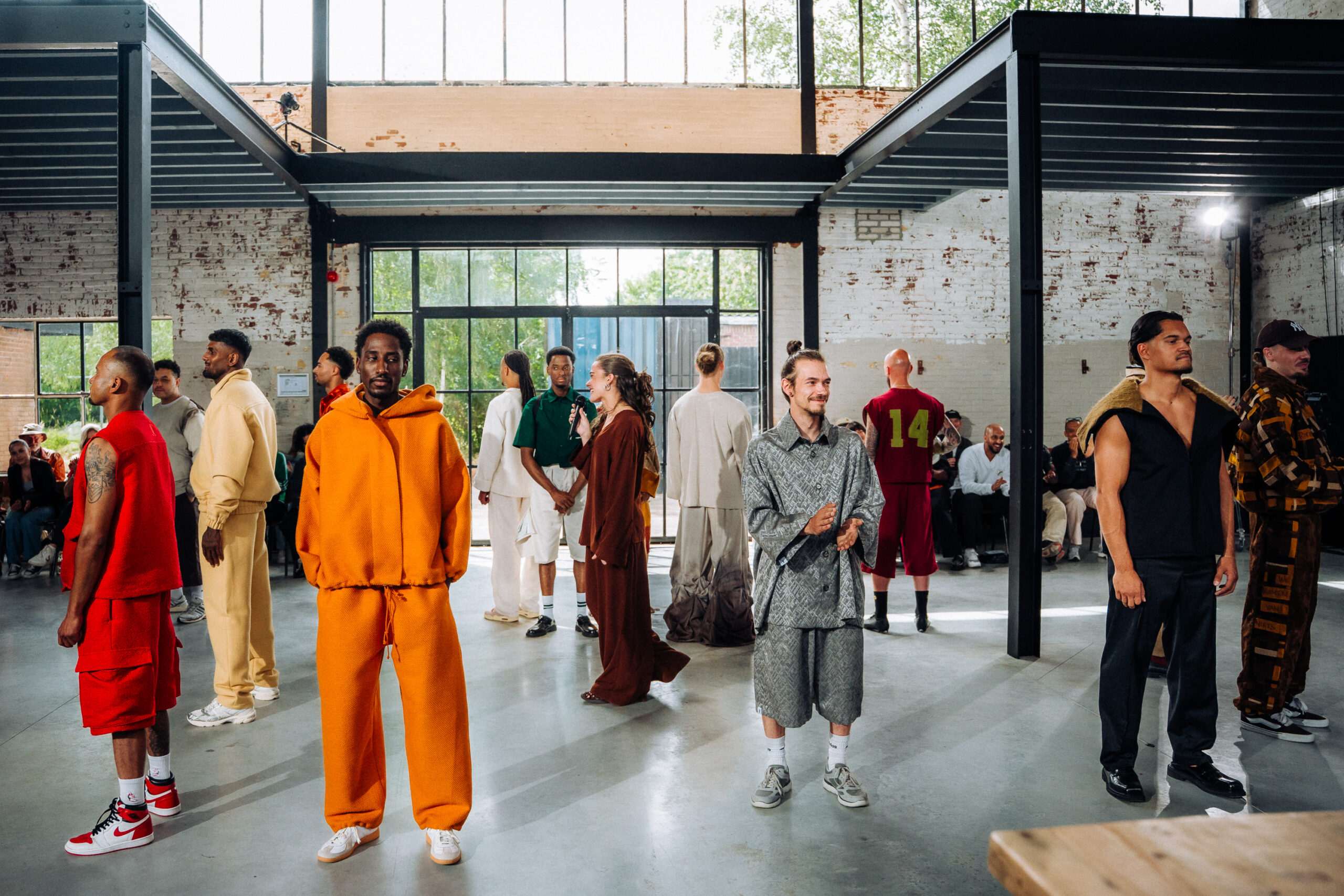
The question this research ultimately poses most sharply is: is this way of working sustainable? The research encompasses seven participants, spread across what was officially three but in practice two school periods. One participant had to be dropped due to time constraints. That is a signal.
Outside an academic setting, in a commercial or semi-commercial design context, this model would require a designer to conduct an intensive analysis process per client, select materials for each individual and build a design from scratch. The time and financial investment required is disproportionate to what the market is generally willing to pay for bespoke work, unless it concerns the very highest segment, haute couture for example, if you are sufficiently skilled and experienced for that. Not a final-year student. This is not a reason to abandon the method, but it is a reason to put its scope in perspective.
The project REBIRTH has come to function as an artistic-academic experiment and that is valuable to me. The project implicitly suggests a model that could also be applicable beyond that context. That assumption calls for critical reflection: to what extent is this a scalable model for the design practice of JJAYCE, and to what extent does it remain a one-off and non-reproducible research moment?
A more honest answer to that question is that it is not a method transferable in its current form, but rather a point of reference: a way of looking at identity that can inform my future design practice. The value lies not in repeating it, but in the awareness it develops. Finally, the role of the designer remains complex. The interpretation of identity is inevitably subjective. This raises the question of how far a designer is capable of making an ‘honest’ portrait or whether every portrait ultimately also constitutes a form of self-portrait.

It is important to be clear about who you are designing for, or who your target audience ultimately needs to be, so that you know which findings are useful or even applicable for whom.
What this research reveals in broader terms is a tension that is not unique to this project but symptomatic of a larger question within contemporary fashion: the tension between personal meaning and collective legibility. Fashion functions as a social phenomenon. It exists in the interaction between people, in the gaze of the other, in the shared codes of a time and a place. Anyone who tries to bypass those codes in favour of purely individual expression risks speaking a language understood only by a few. That is no objection if the goal is artistic or experimental. But it calls for awareness of the choice involved: who are you making for, what do you want to achieve, and what price are you willing to pay in legibility for the depth you are seeking?
For me personally, this research has also clarified something about the direction I want to take. I want to keep working with people and their stories as a starting point. But I want to do so with the understanding that a garment does not need to say everything.
A design can pose a question rather than give an answer. It can show something without fully explaining it. That space, between what the design shows and what the wearer or viewer adds to it, may well be the most interesting part. REBIRTH has taught me to value that space rather than trying to fill it, and to resist the urge to capture an entire person in a single outfit.
Next page is Conclusion or go back to The 7 Portraits.