


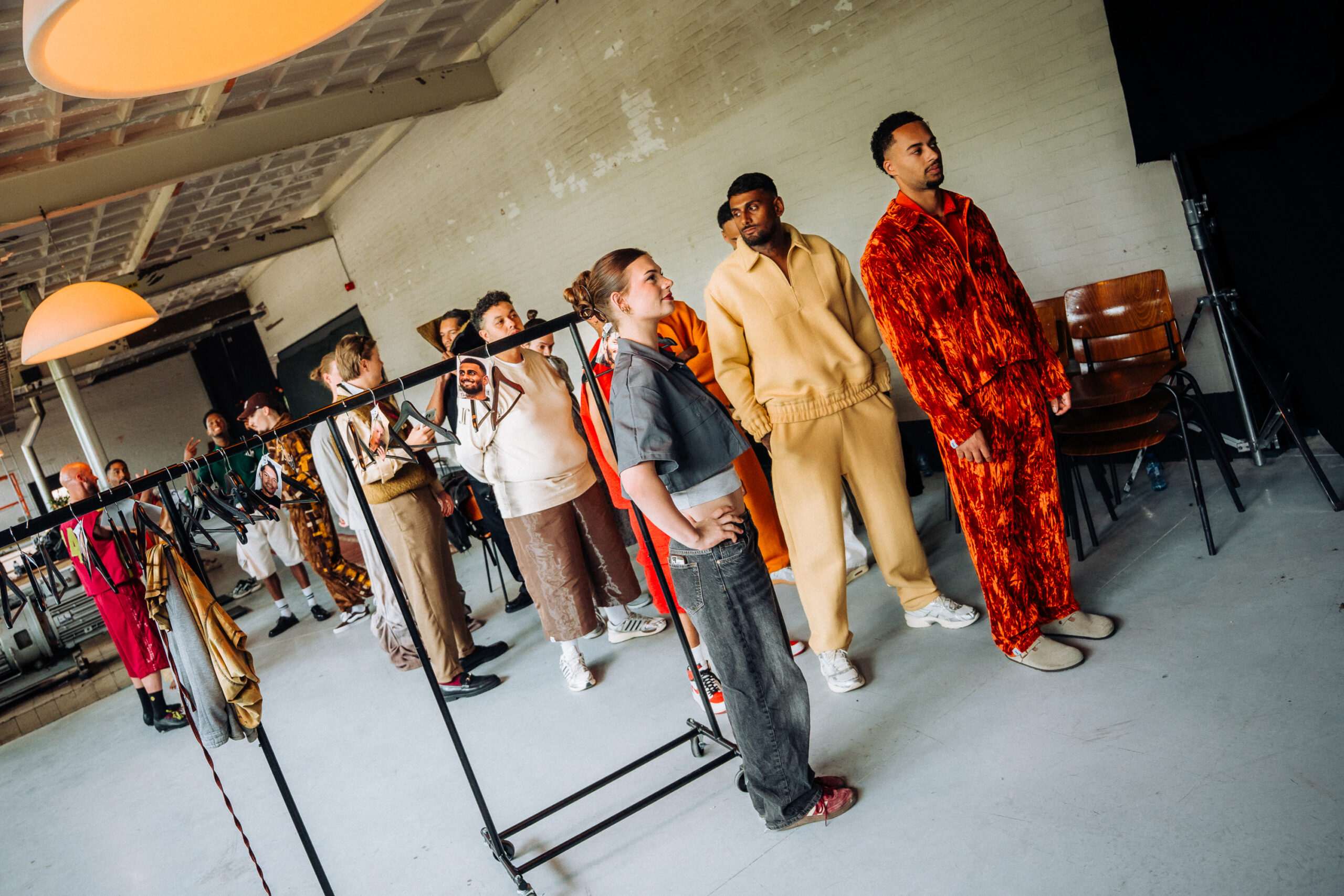
Fashion is often seen as a means of expressing identity. Clothing functions as a visual language through which individuals position themselves within social and cultural contexts.
At the same time, this assumption is problematic. The relationship between clothing and identity is less straightforward than often assumed: where clothing is used on one hand as a means of expression, in practice that expression turns out to depend on interpretation, context and social codes.
This research sits within that tension. The central question is to what extent clothing is actually capable of making identity visible, and where the limits of this translation lie. Rather than approaching clothing as a direct means of communication, this research examines how identity gains meaning and form within the design process and how it is sometimes simplified or reduced.
The motivation for this research comes from a combination of my earlier work at the academy and the start of my own design practice, in which I work with personal stories and character traits as a starting point.
People come to me for a specific occasion, or I collaborate on social projects, theatre productions and so on. During earlier projects I noticed that translating these traits into clothing is not self-evident and that this is an area I want to explore further. Qualities like ‘calm’, ‘complexity’ or ‘strength’ cannot be directly converted into form, material or silhouette without choices and simplifications taking place.
This now forms the basis of the problem statement: to what extent can clothing function as a carrier of identity, and what is lost in this translation? The research is conducted from a design perspective and uses a research by design approach.
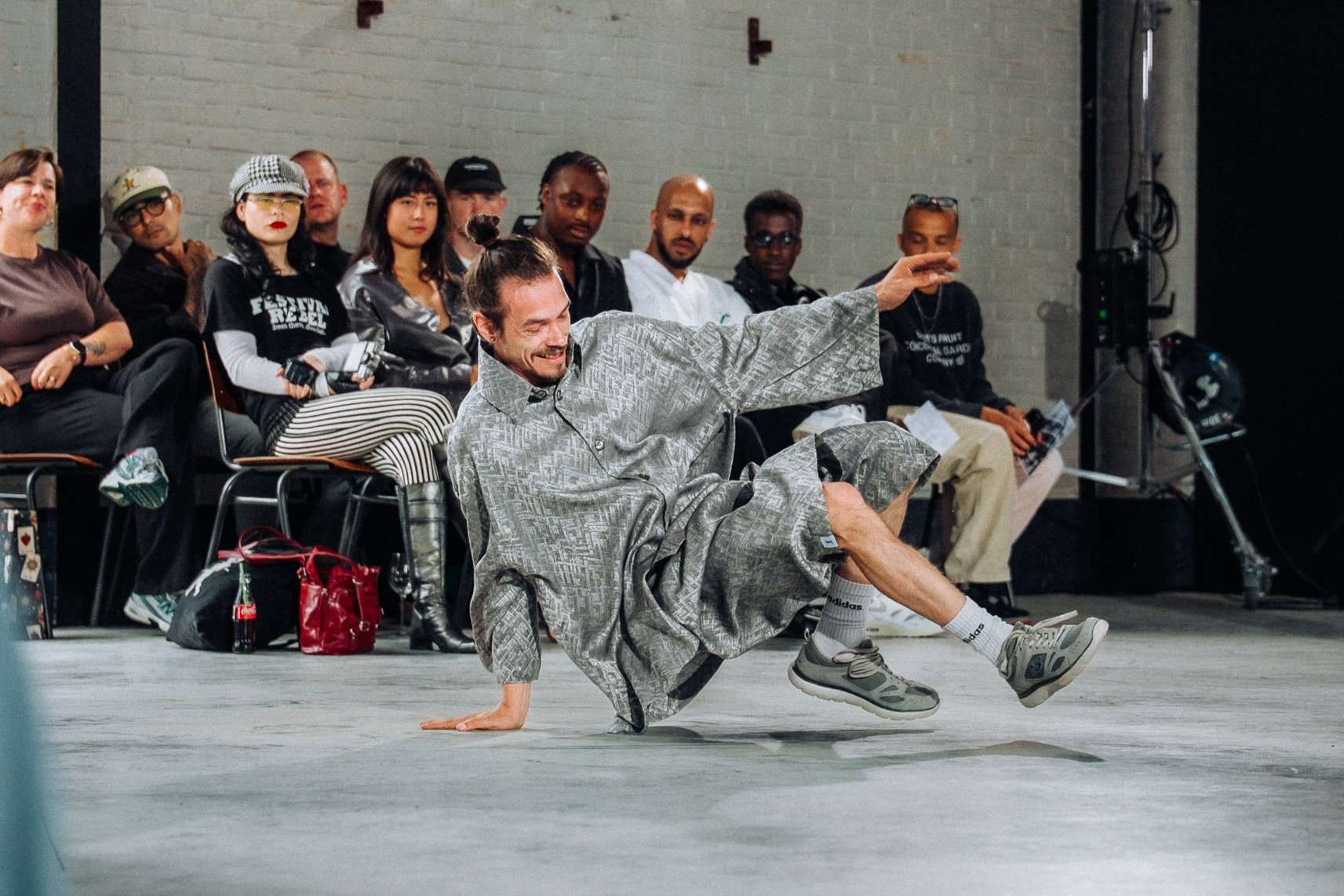

This means that designs are not only the end result but also serve as a means of generating knowledge. Through case studies based on seven people from my immediate circle, the research examines how different identities are interpreted and translated into wearable garment designs. At the same time, the research acknowledges that these translations are subjective. The designs are not objective representations of the people but reflections of my interpretation as a designer with a close relationship to them. This underlines the role of the designer in the construction of meaning.
Alongside the practice-based research, theoretical frameworks are drawn from fashion and social theory, including the semiotics of Roland Barthes, Erving Goffman’s theory of social presentation, Judith Butler’s theory of performativity, and the design practice of contemporary designers such as Martine Rose and Raf Simons. These theories are not only applied but also questioned in the light of practical examples.
The aim of this research is not to develop a definitive method for translating identity into clothing, but rather to gain insight into the possibilities and potential limitations of this approach including the question of its viability beyond an academic setting.
This research is relevant for designers working with identity and personal narratives, but also for a broader discussion within the fashion industry. In a time when individuality is increasingly emphasised, yet production processes remain focused on scalability, a tension emerges that calls for critical reflection.
Next page is Research or go back to Summary.
