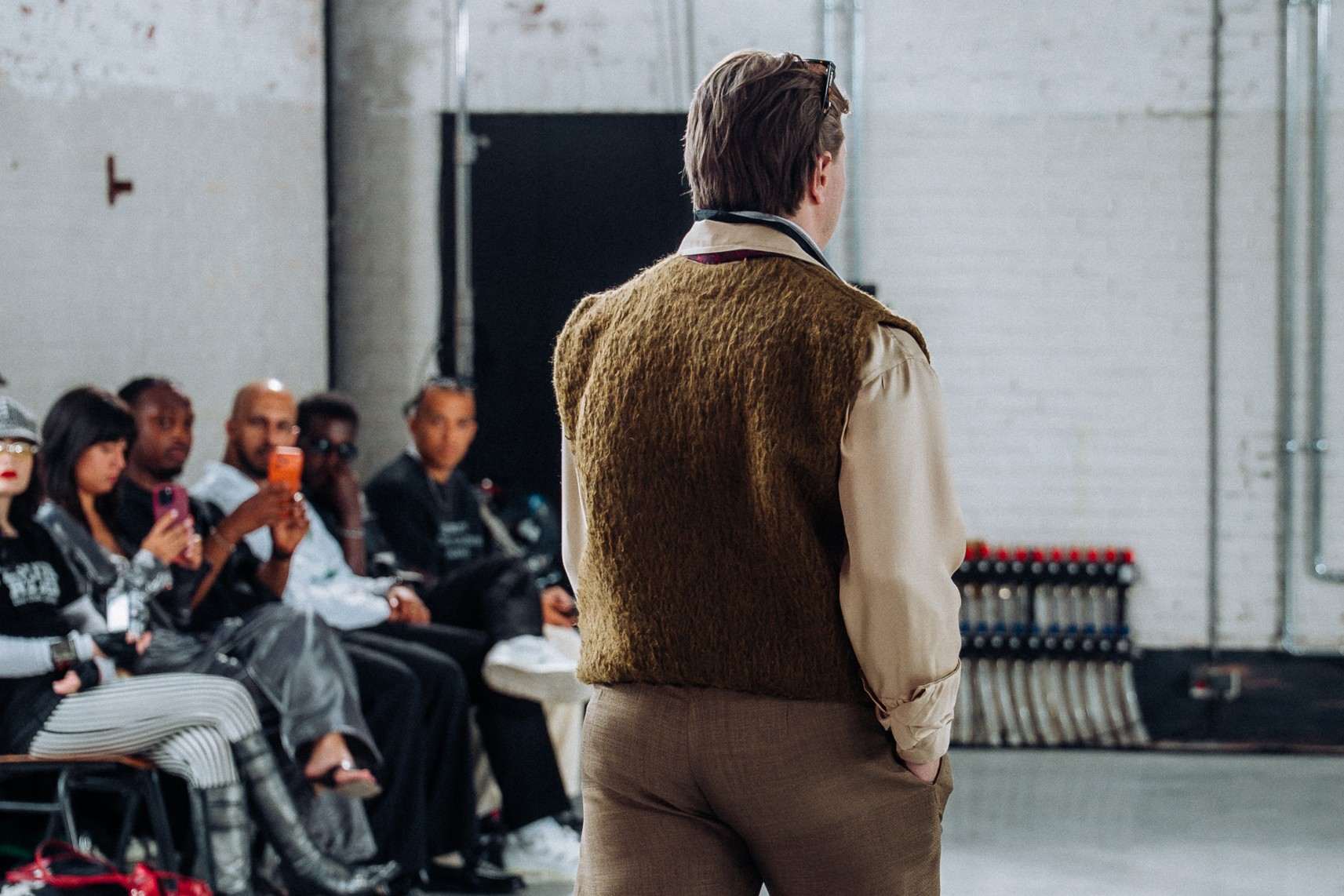
How can menswear function as a visual portrait of personal identity?
At the heart of this research lies the relationship between clothing and identity. This framing looks not only at the possibilities of clothing as a means of expression, but also at the limitations I encountered along the way. The focus is on translating character traits, social roles and behaviour into design choices in form, material and detail.
At the same time, it is acknowledged that this translation can never be fully objective: the designer plays an active role in interpreting and selecting qualities, meaning that every design constitutes a simplification and a reformulation of identity.
Within this research, identity is understood as a layered and fluid whole of behaviour, social role, character traits and the perceptions of others. The aim is not a complete representation but a selective translation that reflects my interpretation of visible and meaningful aspects. To answer the central question, the following sub-questions were formulated. At first, how can personal identity be analysed and translated into visual, material and formal choices within menswear and second, to what extent is it possible to develop a consistent design method for this translation, and where does this method appear to fail or fall short?
Fashion as a Communication System
Fashion can be understood as a system of visual communication in which clothing functions as a carrier of meaning. Within semiotics, Roland Barthes describes clothing as a collection of signs that communicate information about the wearer (Barthes, 2006). Elements such as silhouette, material and colour contribute to the construction of meaning.
This approach assumes that clothing is ‘readable’. Barthes’ model presupposes a relatively fixed relationship between sign and meaning, but that assumption works far less well for clothing than for language. Clothing is not a closed sign system: how something is ‘read’ depends on cultural background, environment, generation, social class and the context in which it is worn. Barthes moreover analyses clothing primarily as ‘written fashion’ as illustrated in magazines rather than as worn fashion in everyday life, which is precisely what I am looking at (Barthes, 2006, p. 13).
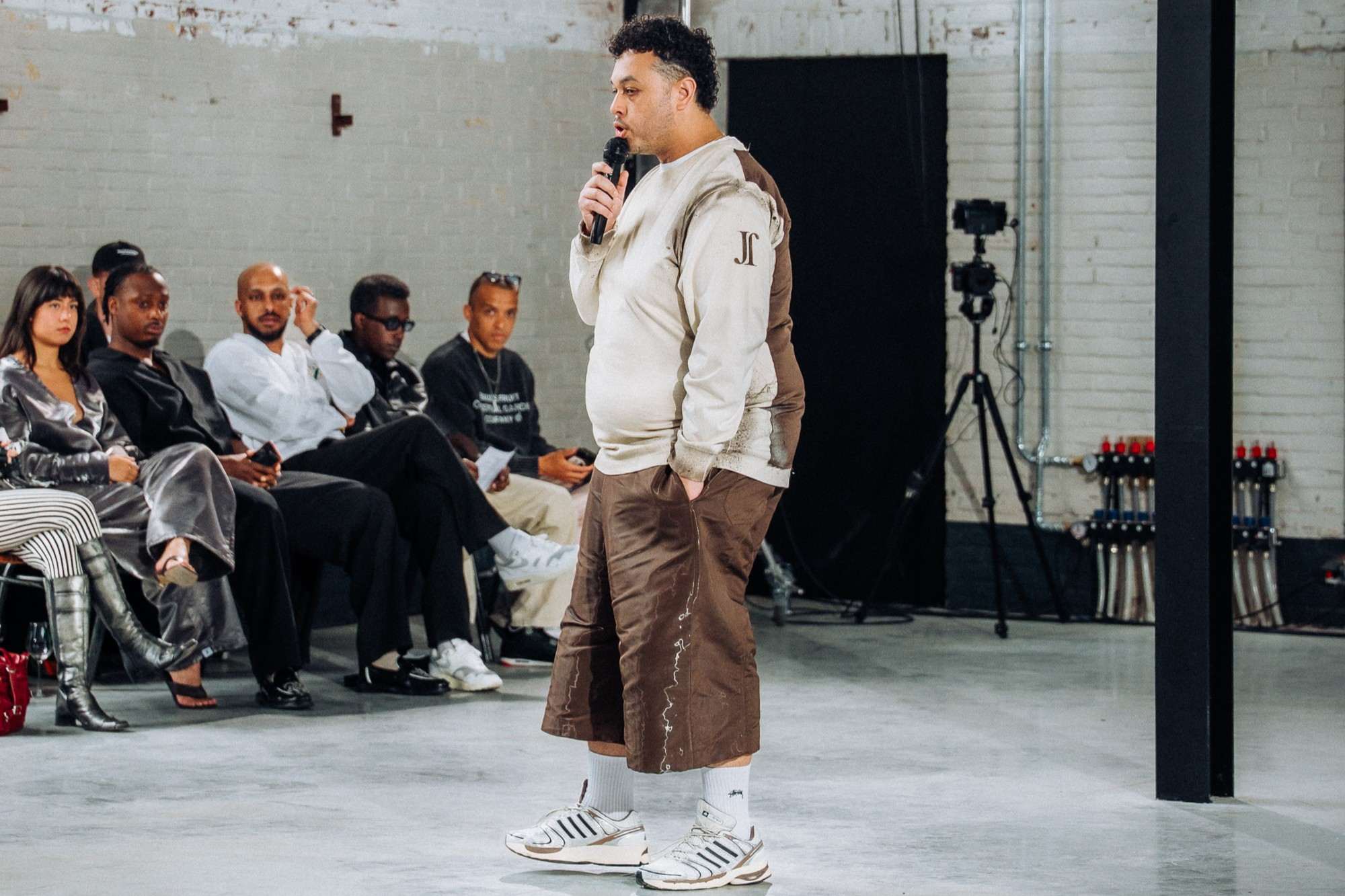
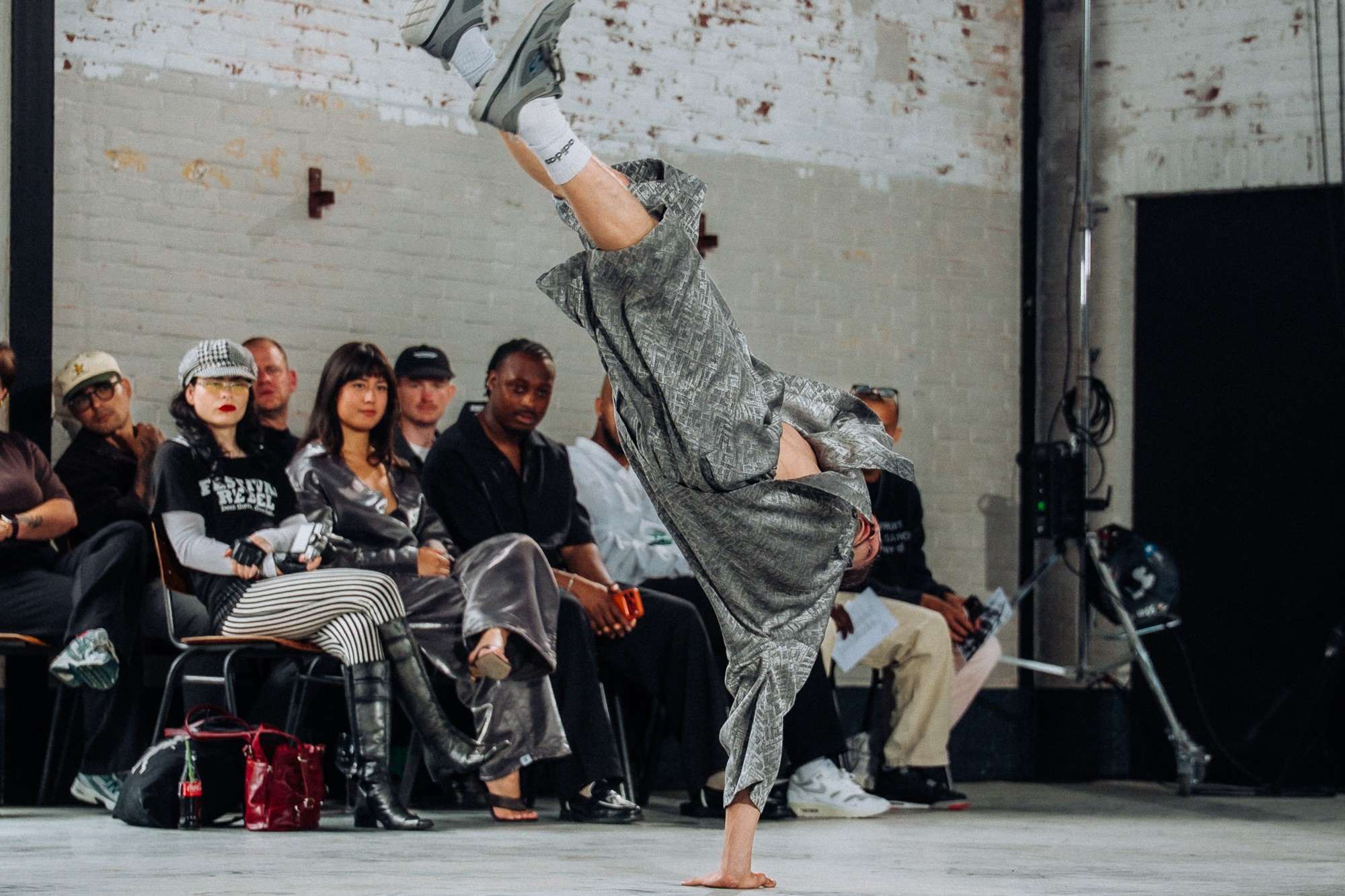
This distinction is crucial: what carries meaning on a sketch or in an image does not automatically work on the body in a social space. Historically, menswear has functioned as a means of making social position and group identity visible (Blackman, 2009).
From formal tailoring to subcultures such as punk and hip hop: clothing functions as a visual code that signals where someone belongs. These codes are not universal, however, but culturally and contextually determined. Designers like Martine Rose translate social and cultural contexts into recognisable visual forms. Her work shows how clothing can function as a constructed image of a particular archetype. At the same time, this research makes clear that this communication is never fully controllable. Design intentions are not automatically recognised by the viewer, and visual elements can evoke different, sometimes even contradictory, meanings.
Within the contemporary fashion debate, this instability of meaning is playing an increasingly prominent role. The rise of gender-neutral fashion, the growing visibility of non-Western clothing traditions in high fashion, and the influence of social media on the spread of style codes have made the relationship between clothing and identity even more complex. Where relatively stable visual codes once functioned, the suit as a symbol of authority, the uniform as a sign of belonging to a particular group, contemporary fashion is fragmented into a multitude of simultaneous, often conflicting meanings. Styles are detached from their original context, stripped of meaning through Instagram, and reassembled into combinations that are legible to some and completely unreadable to others. For a project that attempts to communicate individual identity through clothing, this has major implications: the viewer who ‘reads’ the garment brings their own entirely personal frame of reference that is almost impossible for the designer to steer.
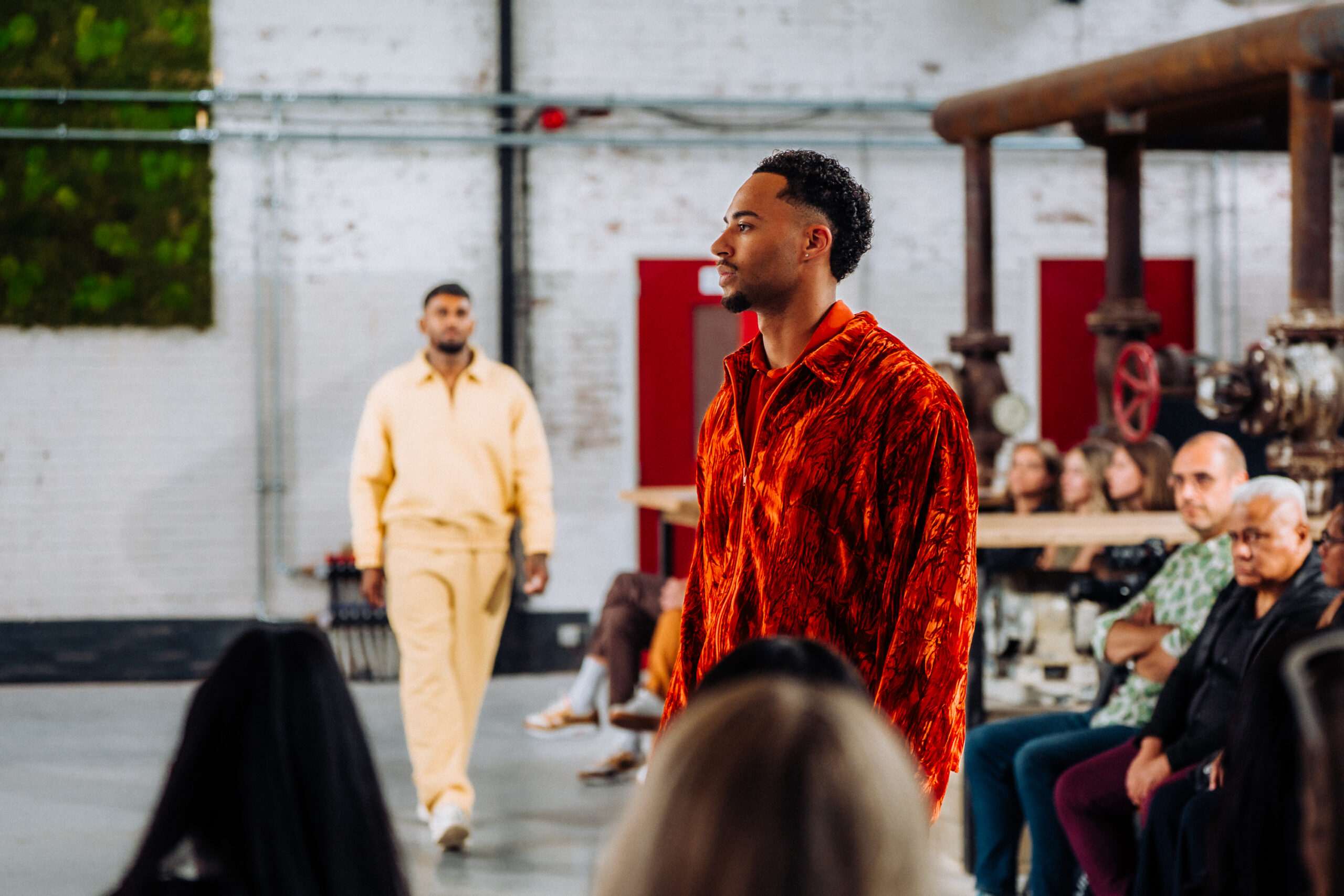
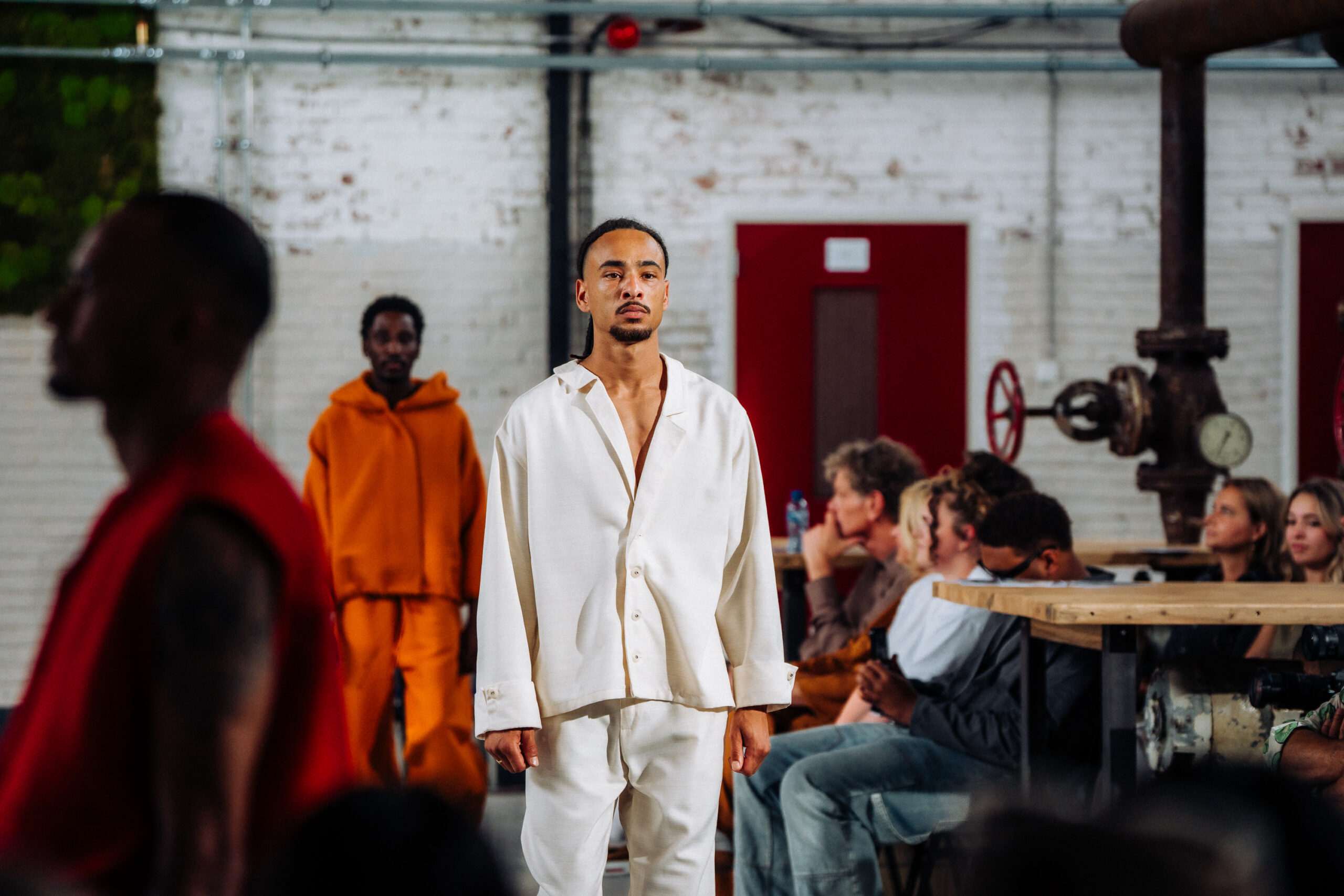
This has direct consequences for the ambitions of this project. When no shared reading system exists, the communicative power of clothing as a carrier of identity is fundamentally weakened. A design can reference a subculture, an emotion or a personality trait but if the viewer does not share that frame of reference, the meaning disappears. Rather than a message that lands, what emerges is a visual object that invites projection: the viewer fills in what they want or expect to see. This is not necessarily a failure, but it does raise the question of what the ambition of ‘portraying through clothing’ actually entails and whether that ambition is realistic.
Within this research, fashion is therefore not approached as a straightforward means of communication but as an open system in which meaning is constructed, shifted and sometimes misunderstood. That instability is not a shortcoming of an insufficiently considered design; it is a structural property of this form of communication.
Identity and Social Presentation
Erving Goffman describes identity as a form of social performance, in which individuals present themselves depending on the situation (Goffman, 1959). Clothing plays a role in this presentation as a ‘costume’ in the theatrical metaphor Goffman employs. Goffman’s model offers a useful starting point, but in this research it runs up against a limit: his theory assumes that the performer controls their own presentation.
In this project, however, it is I as the designer who largely takes over that control. The garments do not function as an expression by the wearer but as an interpretation by the maker. This shifts the question: it is no longer about how people present themselves through clothing, but about how a designer presents someone else and what may be lost in that process. This makes the authenticity of the representation problematic.


Where Goffman describes social performance as an interplay between actor and audience, in this research project a third party is decisive. The designer filters, selects and boosts certain qualities. The design is therefore not a perfect mirror of the person but a construction and that construction always carries the signature of its maker.
A complementary and sharper theoretical framework is offered by Judith Butler’s theory of performativity. In her work, Butler argues that identity is not something people possess and then express, but something that emerges through a repetition of actions and behaviours (Butler, 1990). According to Butler, identity is not an inner core enveloped by clothing, but the result of a continuous, context-bound performance.
What Butler says has a direct consequence for this project. If identity only comes into being through how you present yourself, then the question is no longer: how do I translate who someone is into clothing? The question becomes: what image of that person does this garment call up? The designer is then not capturing an existing identity but giving it a form. That form in turn influences how others perceive that person. Clothing in that case does more than show it colours how someone is seen.
This connects to what becomes visible in practice within this research. Several participants responded to their design not only with recognition (‘yes, that’s how I feel’) but also with surprise or discovery (‘I never thought this would suit me, but I understand that this outfit is for me’). That response suggests that the design does not merely register but also activates making visible an aspect of identity that the wearer might not have consciously named. That is something different from portraying; it is closer to a form of articulation.
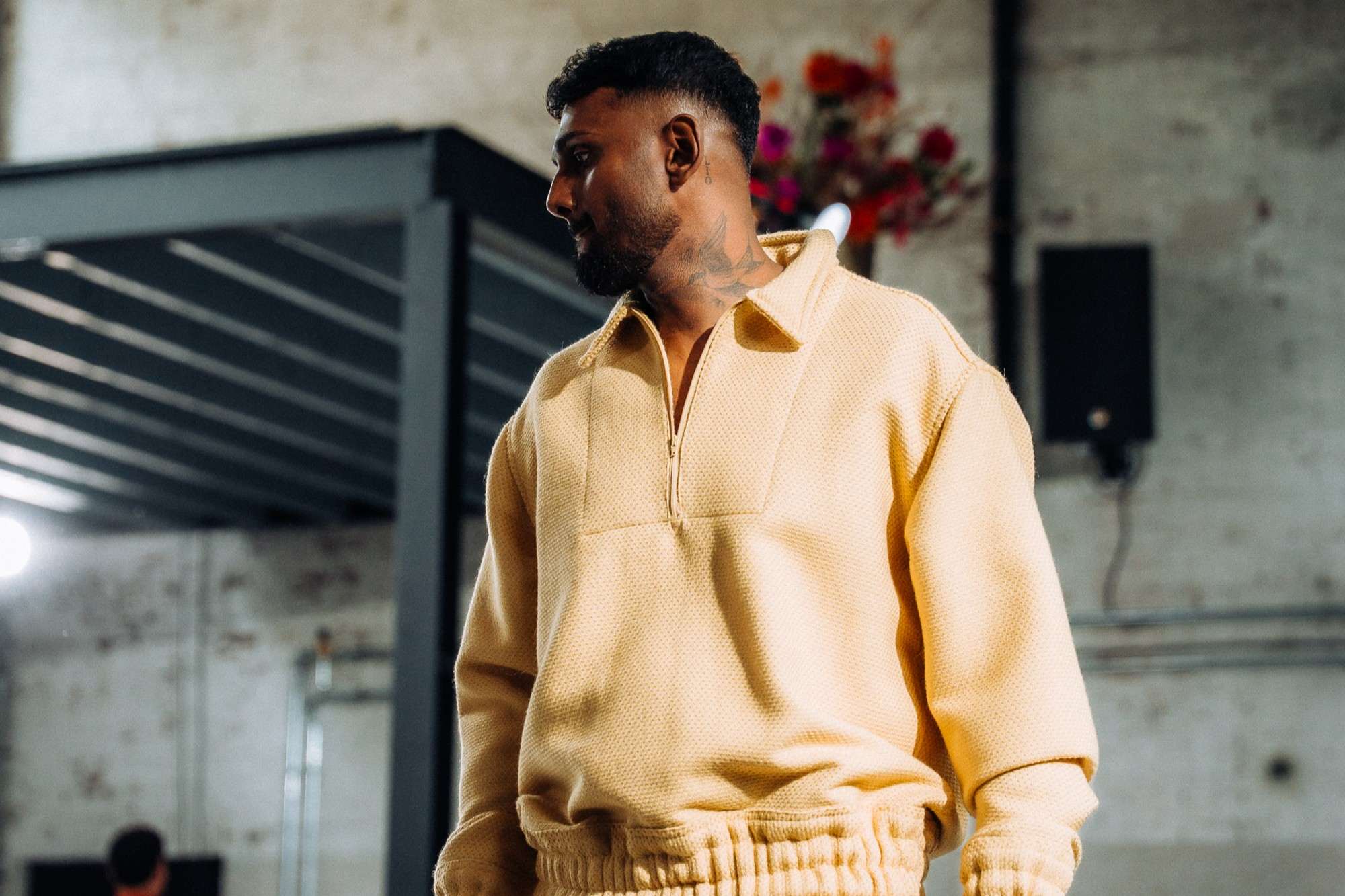

The semiotic approach of Roland Barthes and Erving Goffman’s theory of presentation complement each other, but together they still do not answer the question of how individual identity without archetypes can be translated into clothing.
Butler’s thinking adds a further layer: it breaks open the assumption that there is a stable identity ‘behind’ the design, waiting to be translated. It is precisely at that point that the theories also show their limits and the actual research begins.
Concretely, this means that for the practice of REBIRTH the designer is not simply a translator but may also function as a kind of shaper of the identity they aim to portray. The choice to read Christoph as ‘introverted and controlled’ is not a neutral registration of fact but an interpretation that is reinforced through the design. That design in turn influences how Christoph is perceived by others and possibly, in some cases, how he thinks about himself. It sets people thinking.
The clothing partly creates the identity it claims to represent. This is a property of every representation but it calls for awareness. A designer who works with personal identities carries a certain responsibility that goes beyond aesthetic choices: whether intentional or not, they also help define who someone can be in the eyes of others.
Fashion Design and Personal Expression
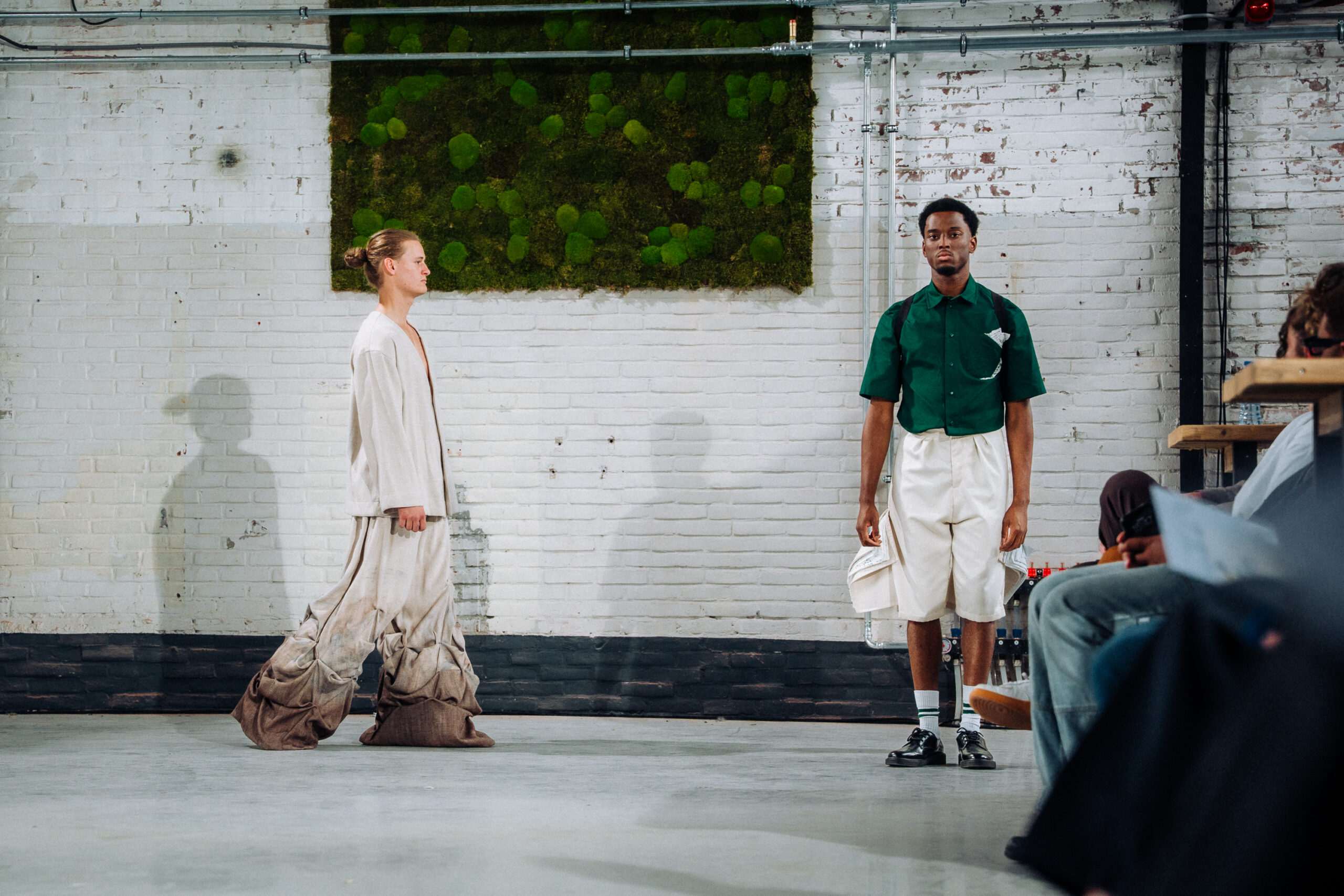
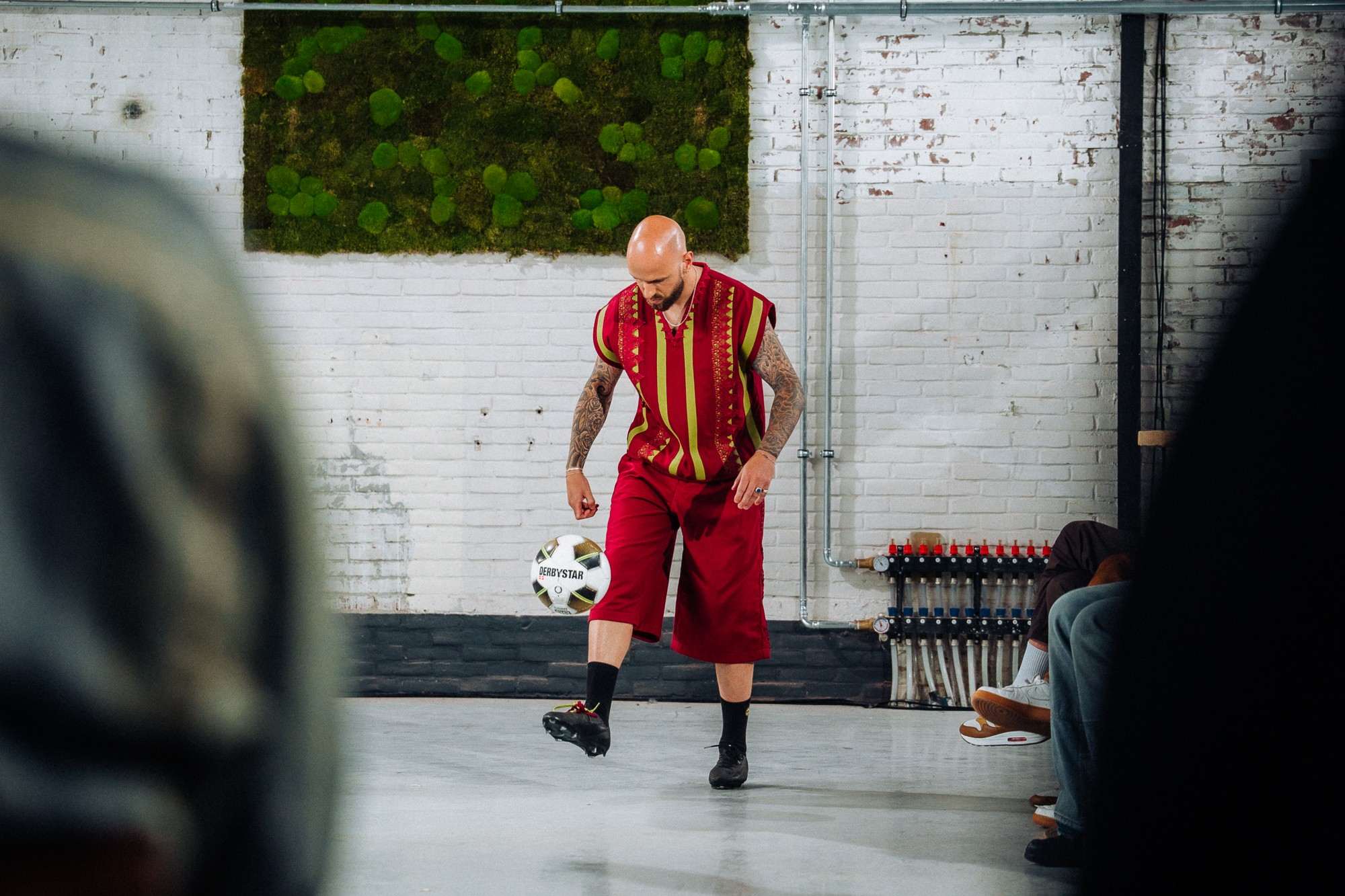
A frequent question in this research is when clothing can be considered fashion and when it functions more as costume. Although both forms can communicate identity, they differ fundamentally in intention, context and legibility.
Costumes are generally designed for performance and aim to represent a specific role as clearly as possible. The visual language is often explicit and direct, which means meaning is expressed relatively unambiguously. That clarity comes at the cost of nuance, however: complexity is reduced to recognisable visual characteristics. Fashion, by contrast, occupies a space more open to interpretation. Clothing must remain wearable and is worn in a wide variety of social contexts, creating a tension between expression and functionality (Schonberger, 2014).
This tension is visible in the work of Raf Simons. His collections carry strong conceptual weight while the garments simultaneously function within a wearable context. This is what makes his work relevant: it shows how identity can be suggested without being pinned down in every detail.
This project positions itself within that tension. The designs are not intended as costumes, but they do push up against boundaries. This immediately raises a question: to what extent does a garment remain fashion when it is so strongly focused on communicating identity? When expression becomes too emphatic, a design can shift towards costume, identity is then not suggested but imposed. At the same time, I do not experience this tension between fashion and costume as problematic; rather, I see it as an interesting in-between space full of new insights where new meanings can emerge.
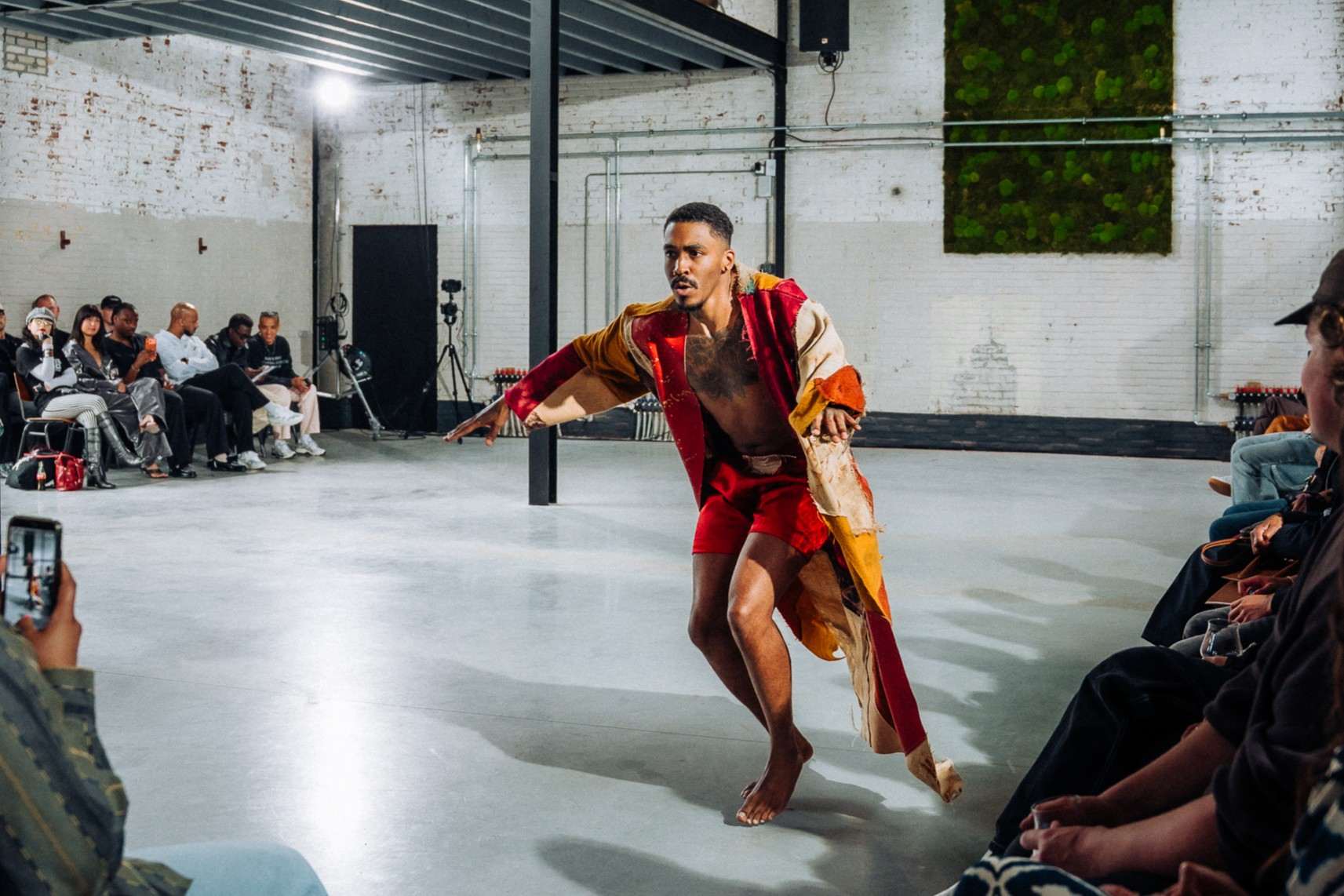
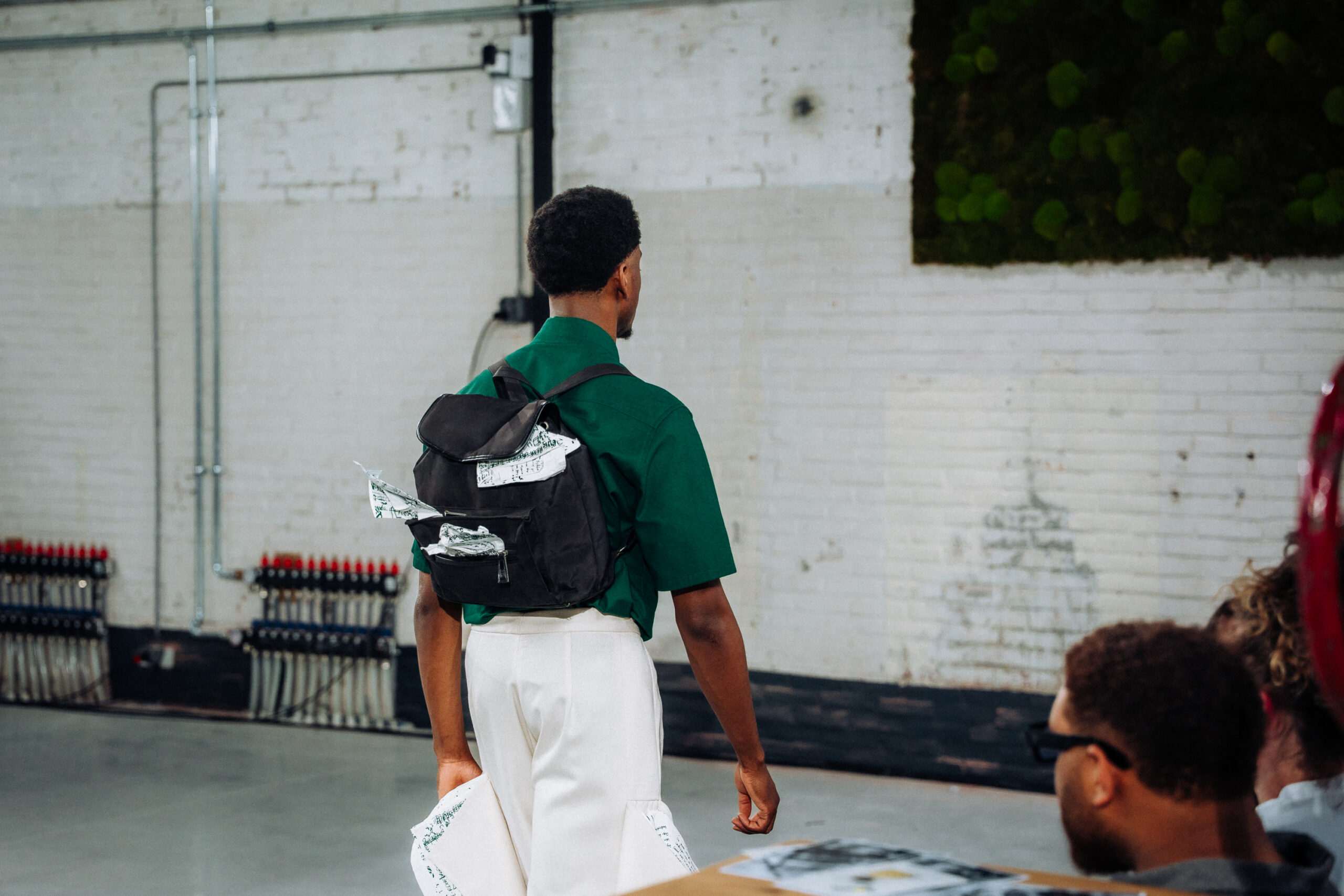
The work of Martine Rose offers an interesting point of reference here. Rose works with archetypes, the London club-goer, the street culture wearer, and translates these into recognisable visual forms. Her designs function as visual constructions referring to a collective identity, not to an individual.
That distinction is precisely what sets REBIRTH apart: where Rose deliberately generalises, this project attempts to capture something unique and less repeatable. That is a fundamentally different ambition. One that tests clothing as a medium in a more demanding way, and one I underestimated at the outset.
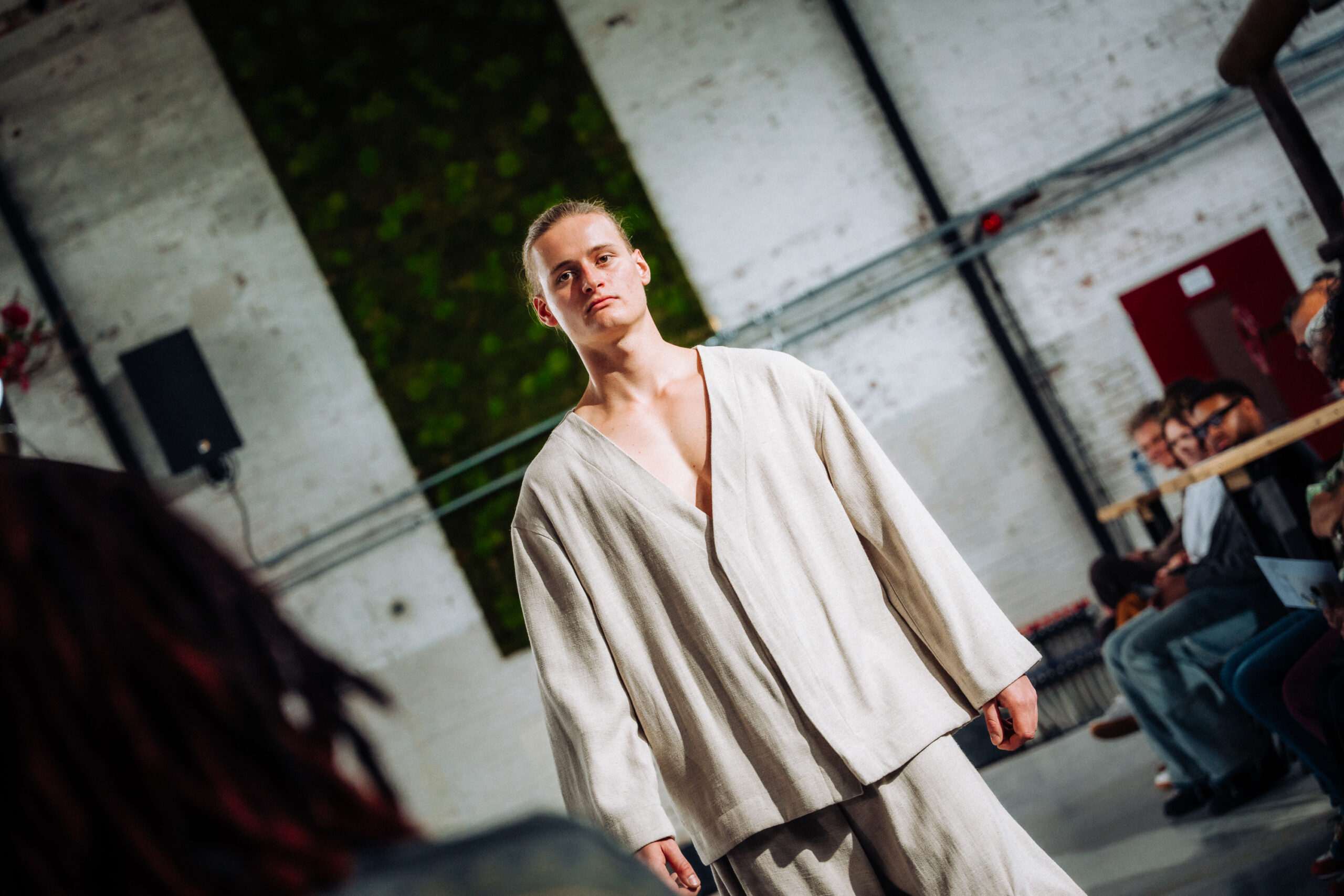
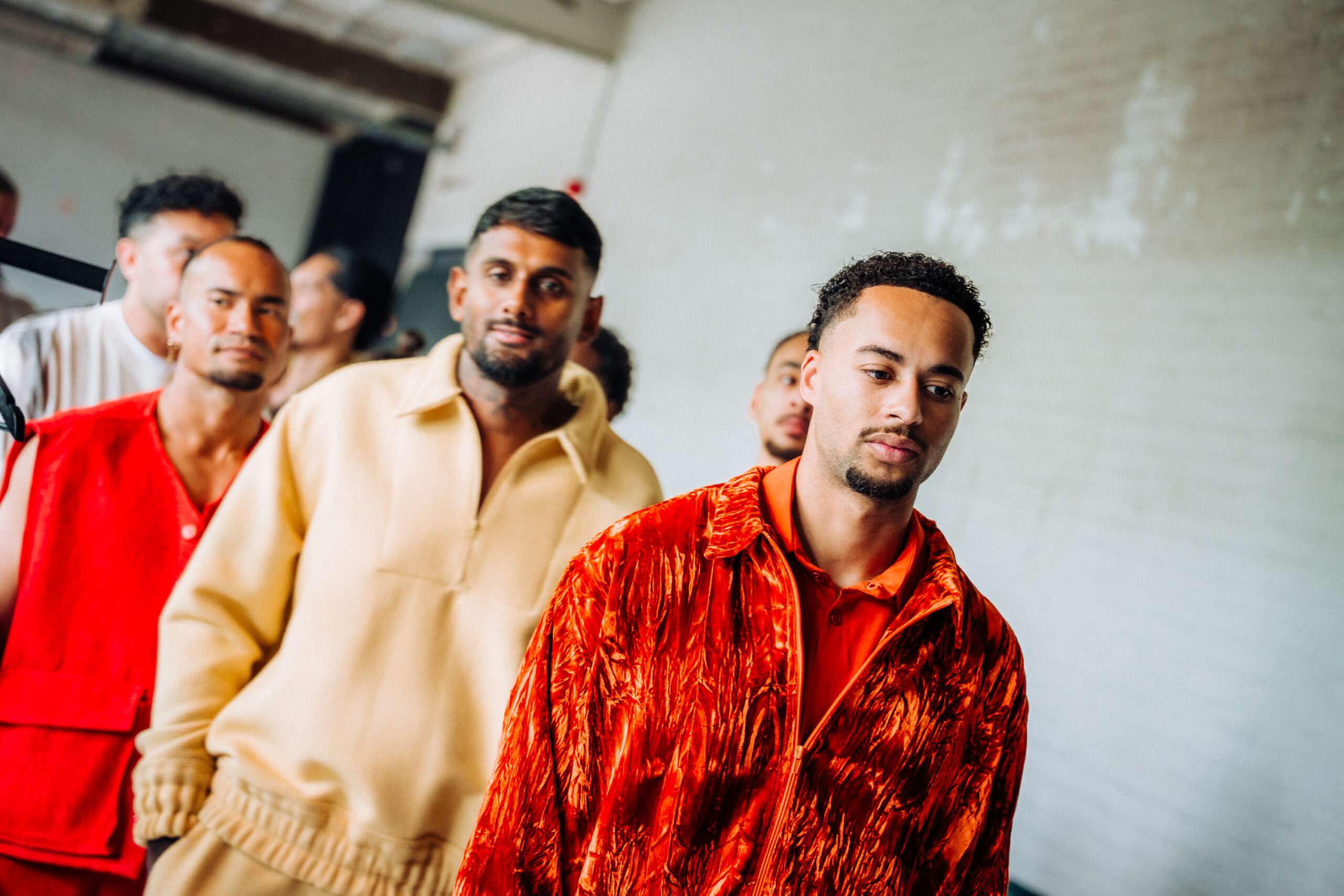
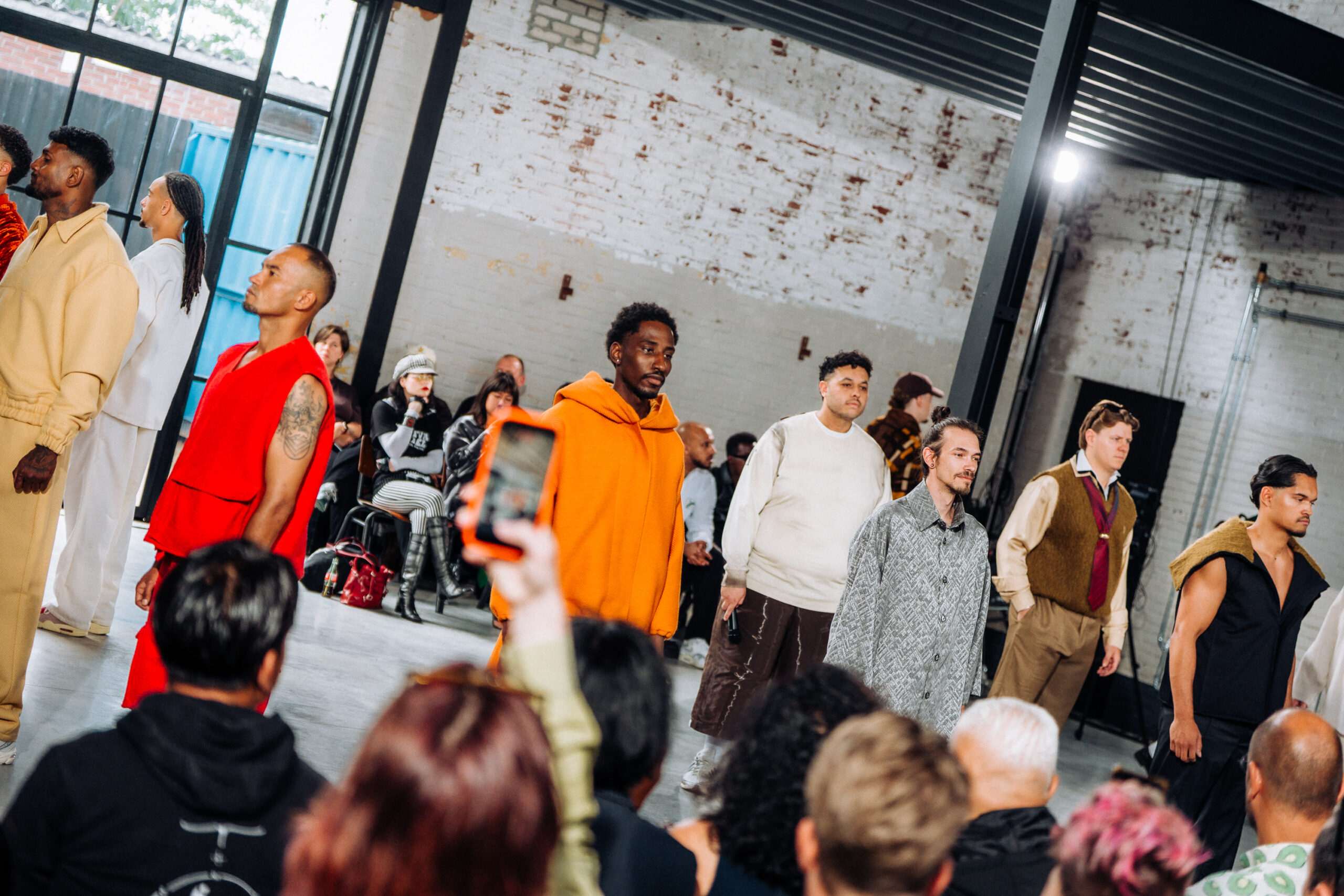
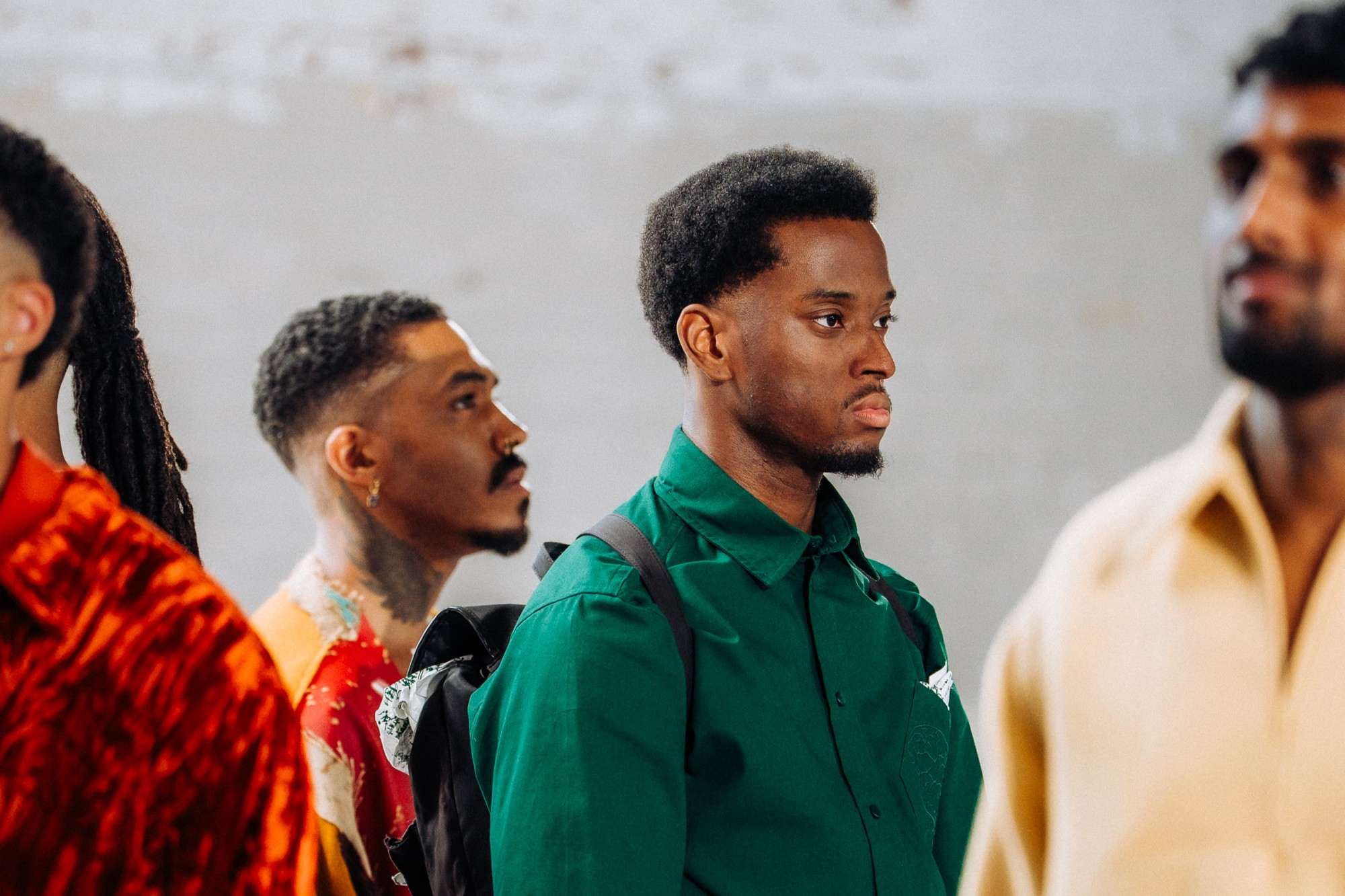
Also relevant is the question of how the wearer themselves relates to the design. In this project, the seven men are not anonymous models but people I genuinely know, who have opinions about how they are perceived and who ultimately wear the design themselves in a live setting.
This adds a layer that is less self-evident in a more commercial context: the wearer has a stake in how they are portrayed. The design touches something personal. Some participants recognised themselves directly in the design. Others were surprised or hesitant at first. These reactions say something about the gap between how someone sees themselves and how they are seen by another. As a designer, you stand right in that gap. You cannot erase it, but you have to engage with it consciously.
Research Methods
This research investigates how personal identity can be translated into visual and material form within menswear. Identity within this framework consists of multiple layers that can exist in tension with one another such as strength and vulnerability, visibility and reticence, control and expression.

Research by Design
This research works according to a research by design approach, in which designs are used not only as an end result but as a means of generating knowledge. The process consists of an interplay between analysis, experiment and reflection. Design choices are not determined in advance but emerge and develop within the making process. Knowledge is generated precisely through making, failing, remaking and reformulating design choices. This method offers space for discovery and nuance, but also has clear limitations. The reliance on intuition and personal interpretation makes the process difficult to reproduce and hard to transfer to other designers or contexts; a tension that becomes central later in this research.
Selection of Participants
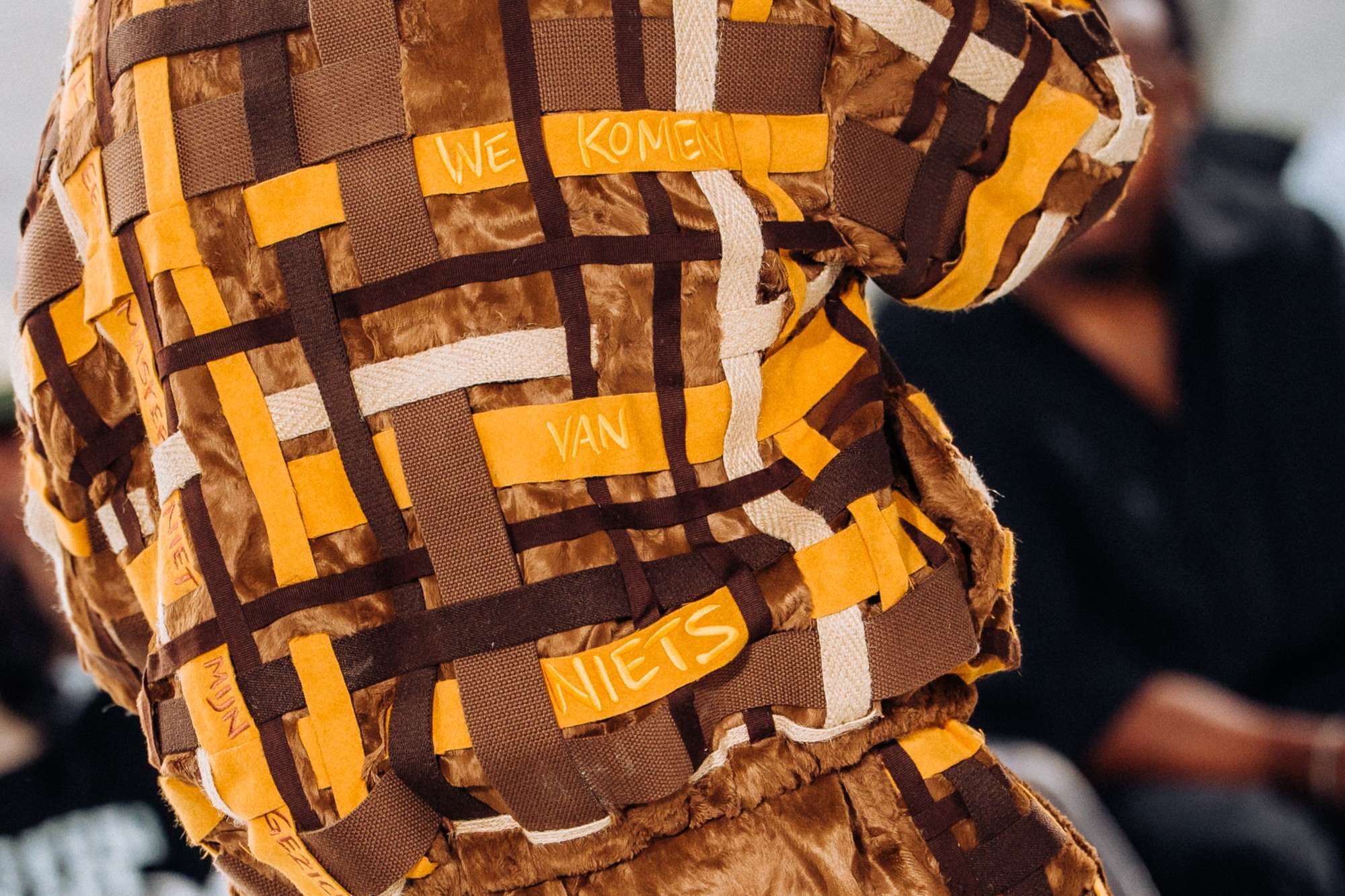
For this research, eight men were originally selected from my personal network based on variation in personality, background and lifestyle. In fact, I initially wanted to choose an even larger group to achieve as much diversity as possible. During the process, however, it became clear that working with eight or more participants was not feasible. To safeguard quality, the focus shifted to seven people; one participant (Kenji) falls outside the final elaboration. Kenji ultimately turned out to carry a particular simplicity that was precisely difficult to capture in its strength and nuance and that was drawing attention away from the rest. This choice underlines an important insight: depth is more valuable here than quantity, but it simultaneously reveals that the method has limited scalability and is time-intensive.
Identity Analysis
The identity analysis is based on my own starting point in this process, in which I began by gathering and interpreting the information I hold about the seven men I know.
To analyse each participant’s identity, I worked with a model consisting of three layers:
1. Background and context.
2. Public perception.
3. Personal identity.
Combining these three layers produces a more complex picture. At the same time, the analysis remains dependent on interpretation. The designer determines which qualities are emphasised and which fade into the background as the analysis is never fully objective.
Translation into Design
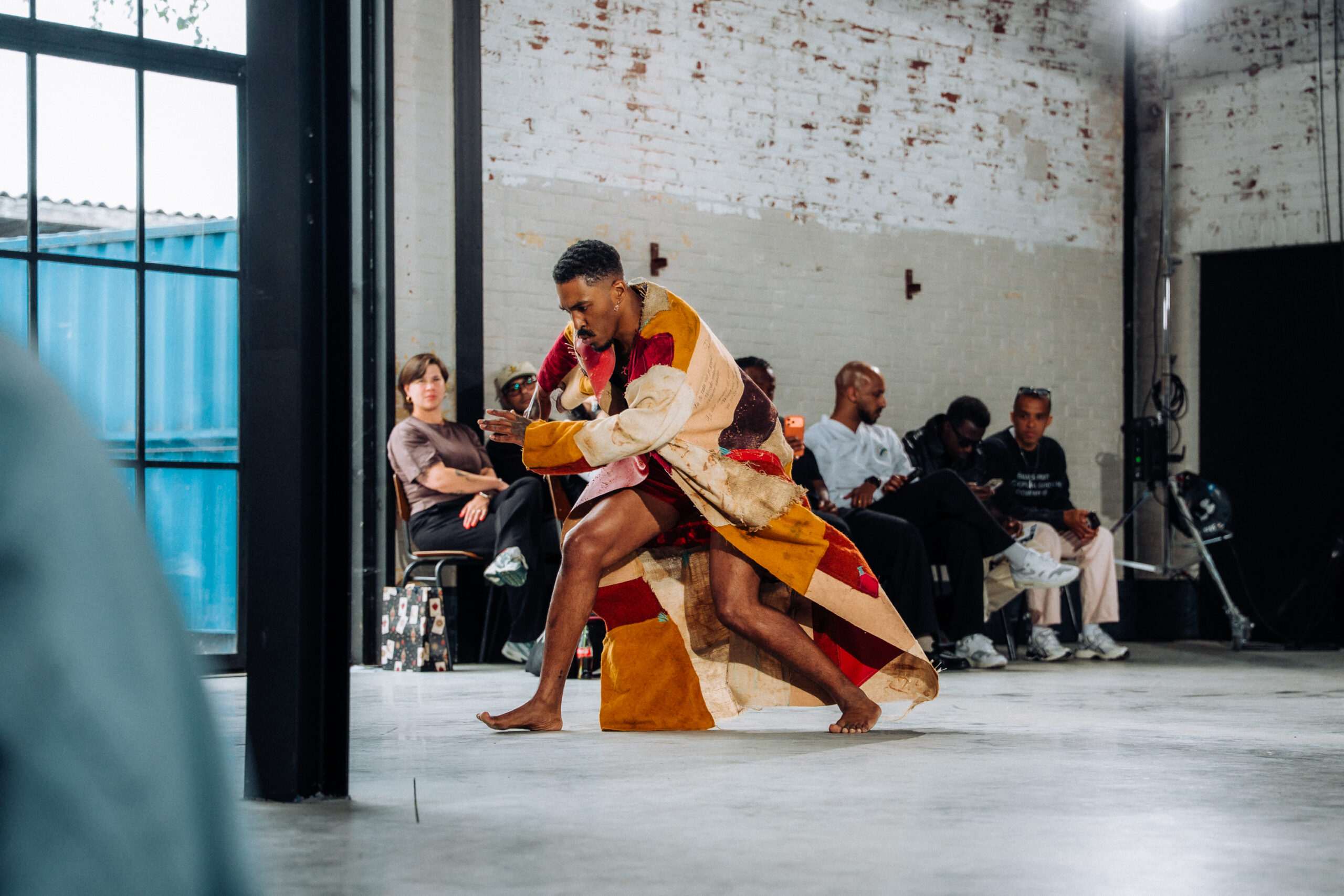
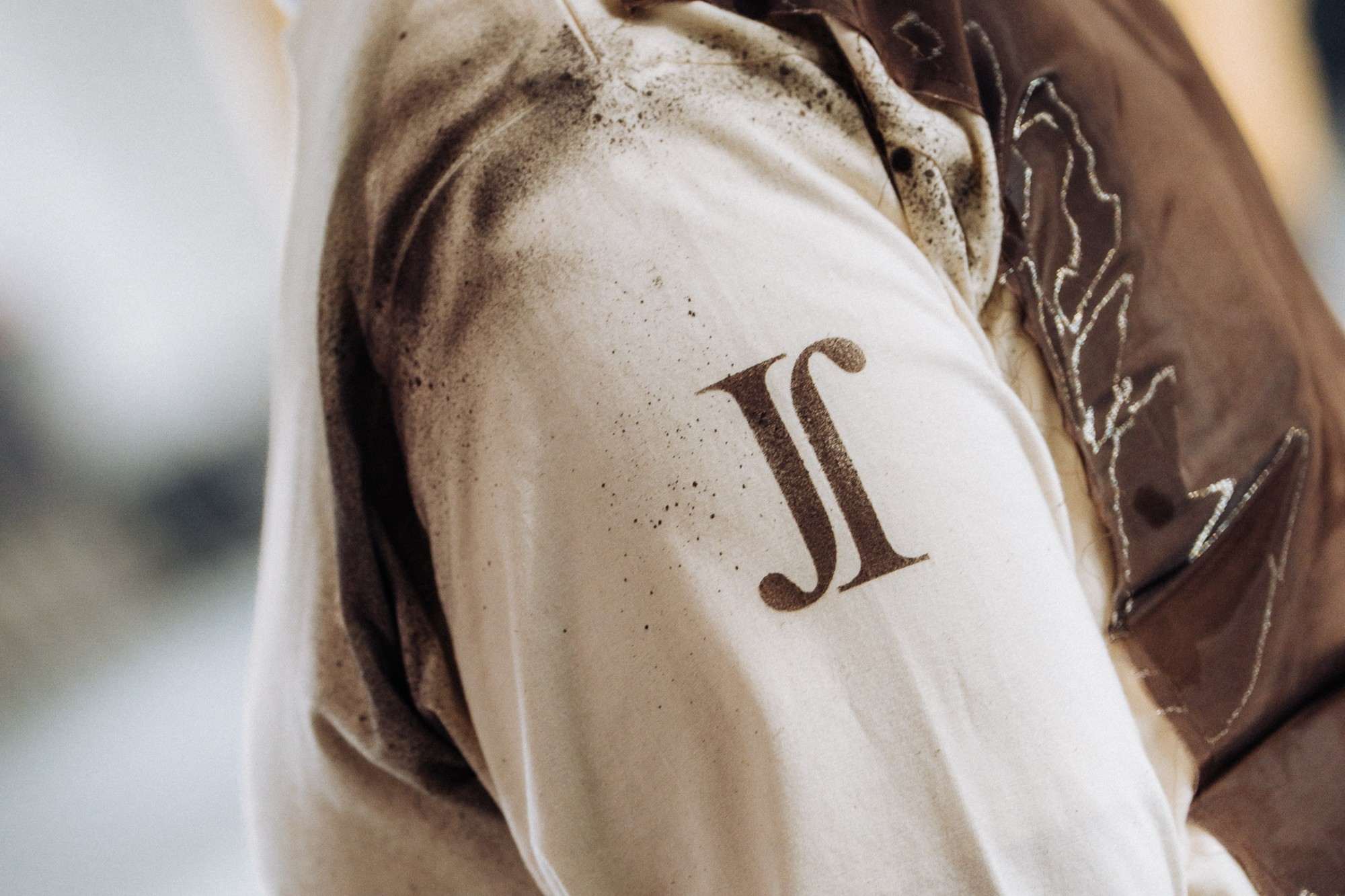
The identity analysis forms the basis for the design phase. The insights gained are translated into design elements: silhouette, material use, colour, texture, details and finish. I also work with a design system in which an interplay exists between a base layer and an outer layer, always supplemented with a twist; an unexpected detail or element that makes a less obvious quality visible, or a quality that only becomes apparent once you know someone better. This connects to my preference for playful details and gives the design a more personal charge. This system helps structure the design process, but in practice it proves not always sufficient. Not every identity fits neatly within this layering. The system therefore functions more as a tool than as a fixed method: it offers direction, but no guarantee of a successful translation.
Design Process
Within this research, the design process does not function solely as a means of arriving at a final product, but as a critical instrument through which assumptions about identity and representation are tested and questioned.
Rather than viewing the design process as a linear translation from analysis to form, this research makes visible that this relationship is unstable, fragmentary and dependent on interpretation.
Although the process was initially structured around three phases, identity analysis, design development and materialization, in practice this structure offers only limited guidance. The phases overlap, shift and require constant revision.
Design decisions are driven not only by analysis but also by intuition, material possibilities and limitations. This undermines the idea that identity can be systematically and controllably translated into clothing.
Identity as Design Instrument
The starting point of the design process lies in the identity of the wearer. This choice assumes that identity can be analysed and translated into visual characteristics.
Within the process, this assumption sometimes creates problems and occasionally things get messy. Identity does not manifest itself as a stable whole, but as a collection of contradictory qualities that depend on context and perception.
Attempts to structure this complexity through the three-layer model provide a handhold, but by categorising qualities and linking them to formal elements, there is a risk that identity is reduced to a designable logic. The ‘twist’, intended to make a hidden layer visible, functions ambivalently in this respect.
On the one hand it introduces nuance; on the other it suggests that complexity can be deliberately added as a design strategy. This raises the question of whether layering genuinely emerges or is merely simulated whether the twist is authentic, or simply a design device.
Material Research as Carrier of Meaning
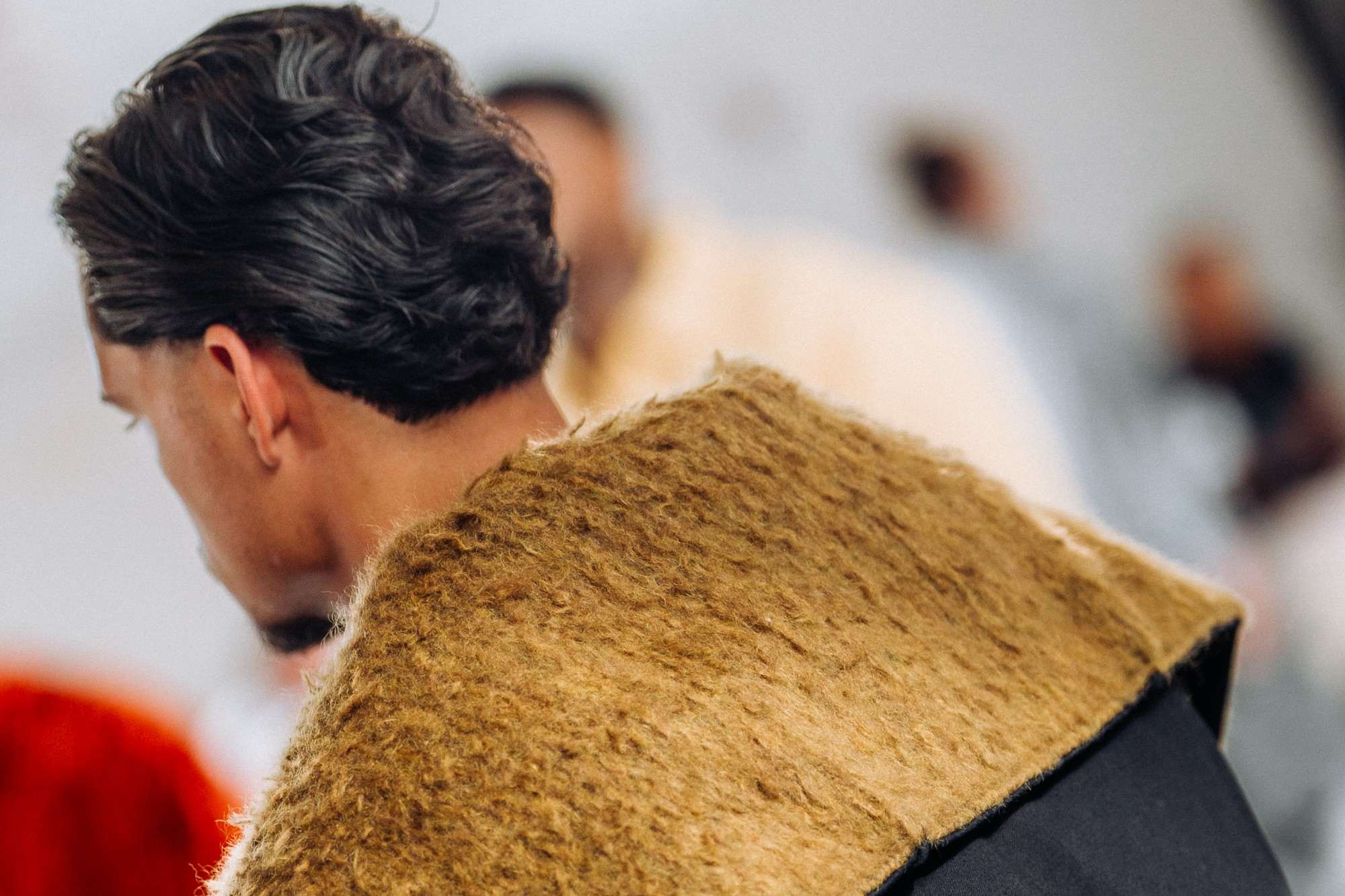
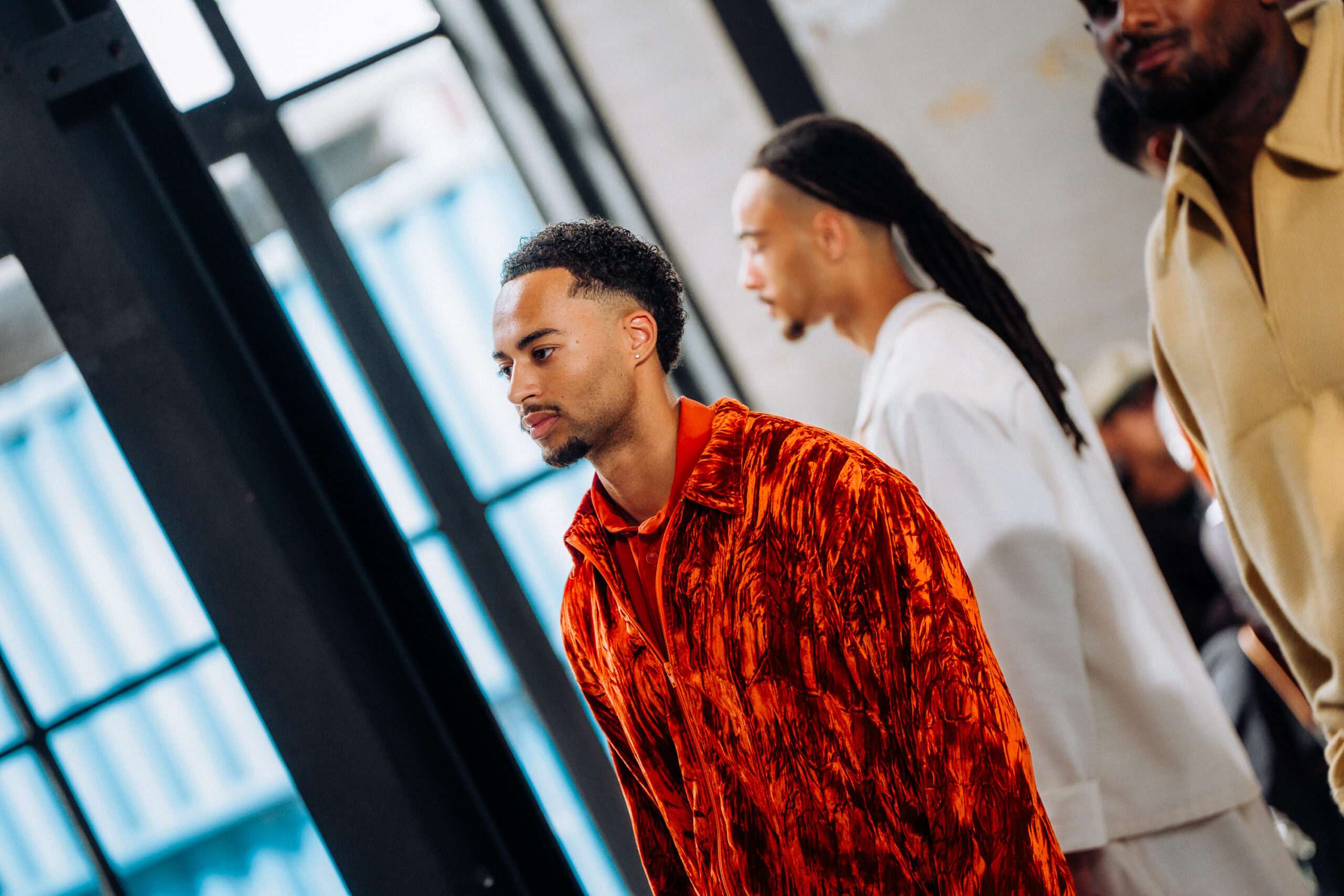
Within the project, the use of deadstock materials is understood as a process of transformation and revaluation. Materials carry a history and could thereby add substantive meaning to the design.
At the same time, this meaning cannot be separated from the interpretation of the designer and the viewer. The ‘history’ of a material is rarely directly visible and often only becomes meaningful through explanation.
This creates a tension: to what extent does the material itself contribute to the concept, and to what extent is this meaning constructed after the fact? If a story is needed to make the material work, is it then the material that communicates or is it the story? And is the choice of fabric not ultimately more a personal preference on my part as a designer?
Furthermore, the limited availability of materials sometimes forces adjustments to the design, causing the process to shift partly from concept-driven to more practically steered. This reveals a tension that characterises the whole project: the ambition to construct meaning meets the reality of material, making and feasibility.

Silhouette and Form
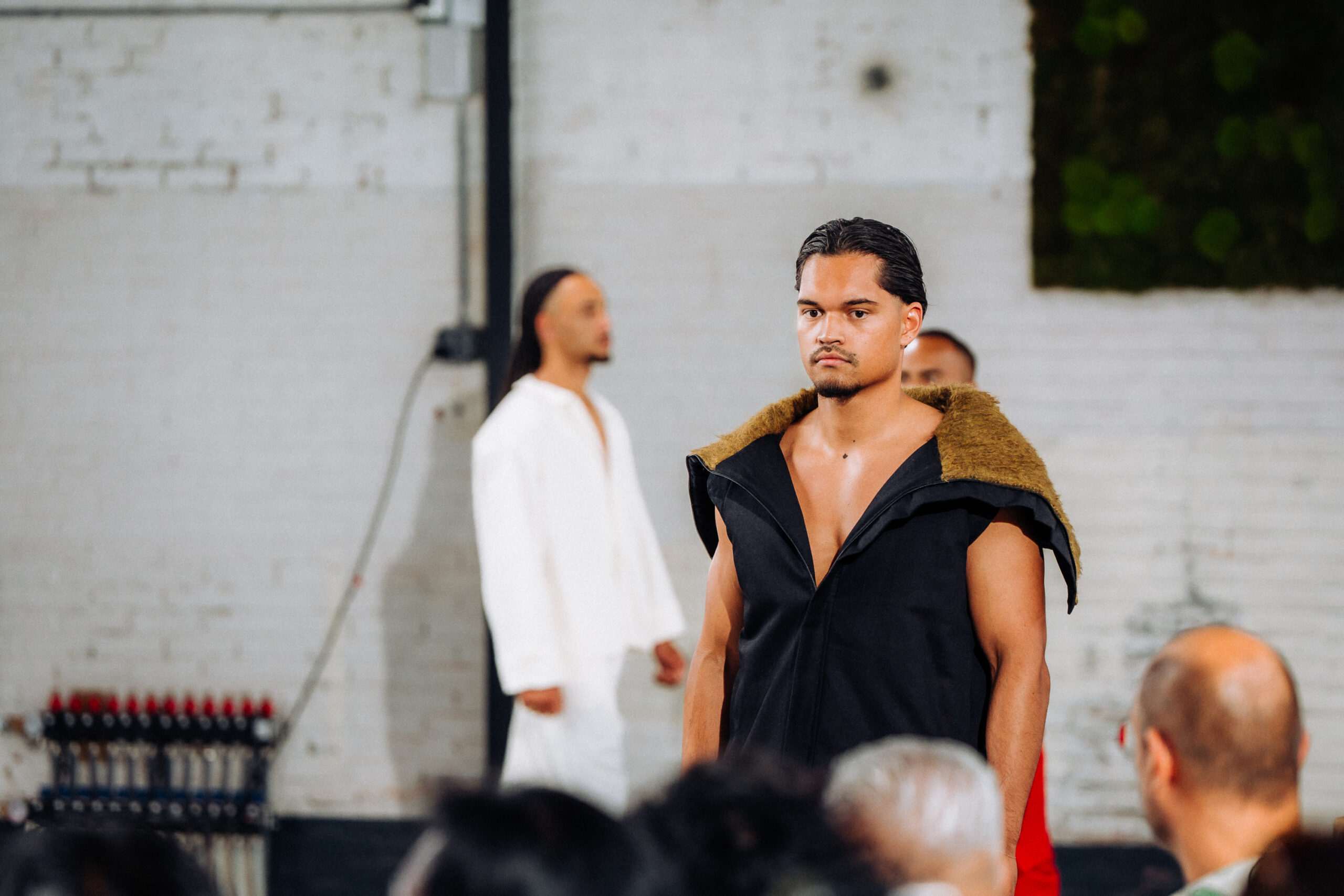
Within the design process, the silhouette is used as the primary carrier of character traits. Structured forms are associated with control, loose forms with freedom.
Although this visual logic works intuitively, it is strongly dependent on cultural codes and interpretation. This means the relationship between form and meaning is not universal but based on shared assumptions that not every viewer will recognise.
As a result, there is a risk that the design communicates less than intended, and that meaning is primarily projected by whoever reads the design rather than communicated by the person wearing it.
Moreover, the quest for clarity often leads to simplification. The more explicitly a form tries to communicate a quality, the greater the risk that the design moves towards stereotypes or costume design.
The design process therefore moves continuously between over-clarity and illegibility, without reaching a stable middle ground and I am not certain that such a middle ground exists at all.

Construction and Detail
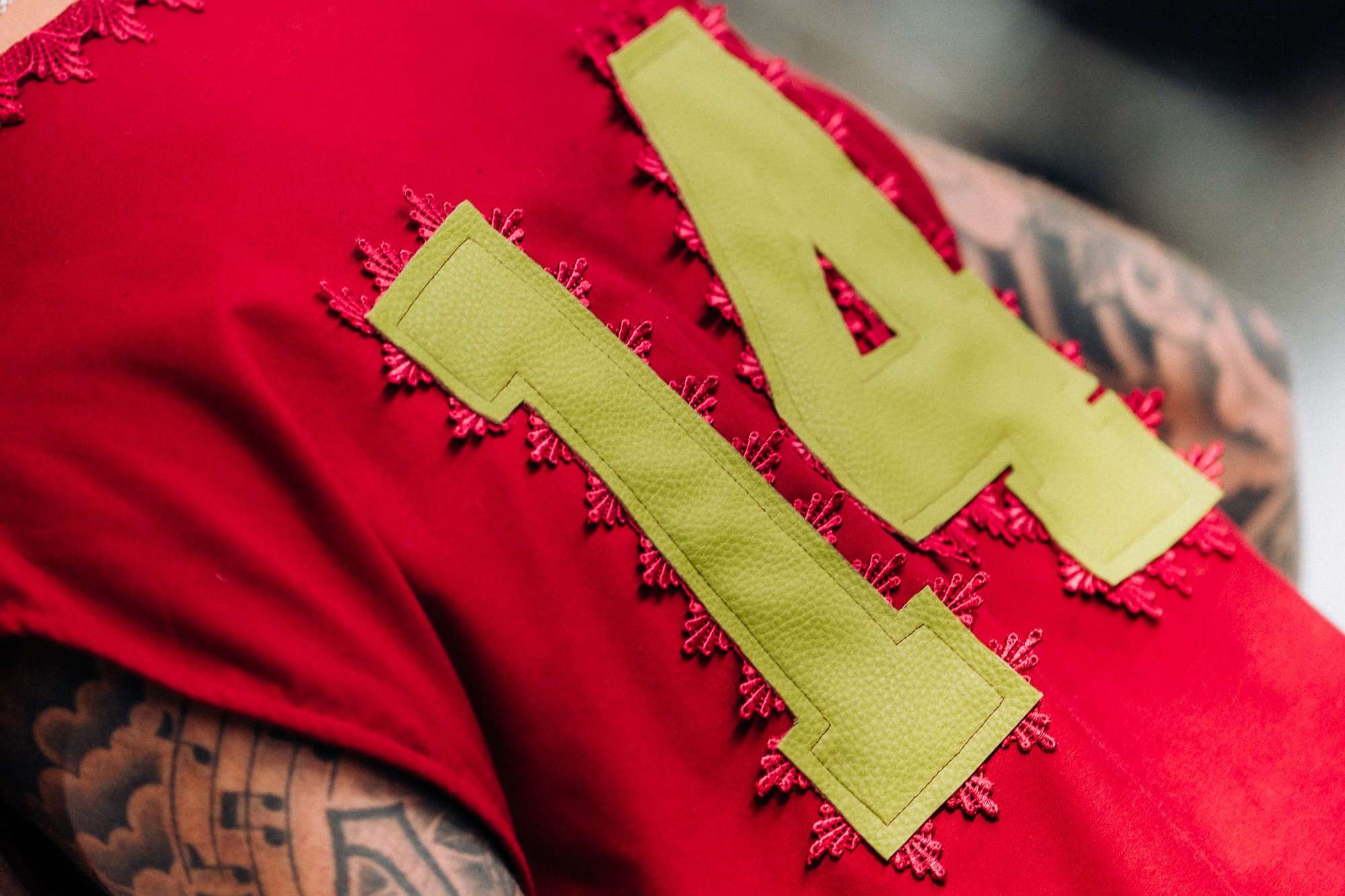
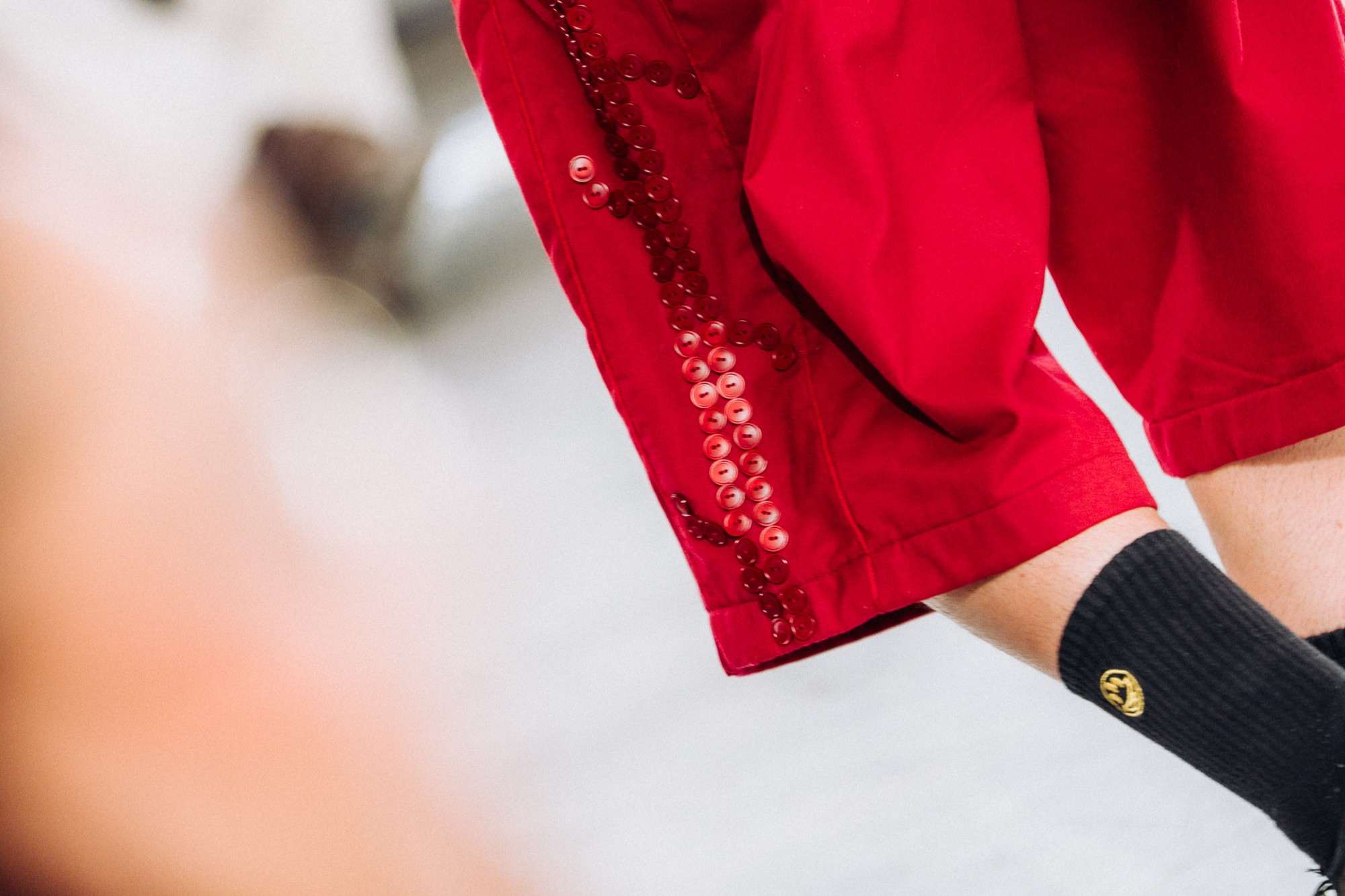
Within the project, details are used as carriers of subtle meaning. Hidden elements, asymmetry and material contrasts are intended to contribute to a layered narrative.
In practice, however, these details are not always read as such: some choices are understood immediately without explanation, while others remain unclear to some viewers even after elaboration. Without context, many of these elements remain visually present but substantively ambiguous.
This creates a risk of overloading: adding multiple layers of meaning that function primarily within the design itself but are not necessarily perceived by the viewer.
This undermines the idea that clothing can function as a means of communication and again underlines the dependence on interpretation.
It raises an uncomfortable question: who is the design actually made for? For the wearer, the viewer or for me as a designer, to generate knowledge?

Periodic Review
The design process within REBIRTH shows that translating identity into clothing is not a fully controllable process, but one characterised by choices, reductions and assumptions.
Where the process is initially deployed to make identity visible, it gradually reveals above all that this is not a straightforward process. The design process therefore functions less as a validation of a fixed method, and more as an insight into its workings and limits.
At the same time, this process has produced something that a more structured approach would have been less likely to yield: a sharper sense of where clothing as a medium reaches its limits. Not as failure, but as information. Every moment a design did not do what I wanted it to do raised a new question. Why does this detail not work without explanation? Why does this silhouette feel more like a stereotype than a portrait?
Those questions are the result of this research more so than the designs themselves. They give direction to how I want to work in the future: with greater awareness of the medium’s limits, and with less tendency to try to capture every aspect of someone in a single garment or look.
Next page is Presentation or go back to Introduction.